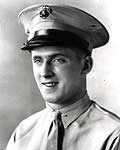
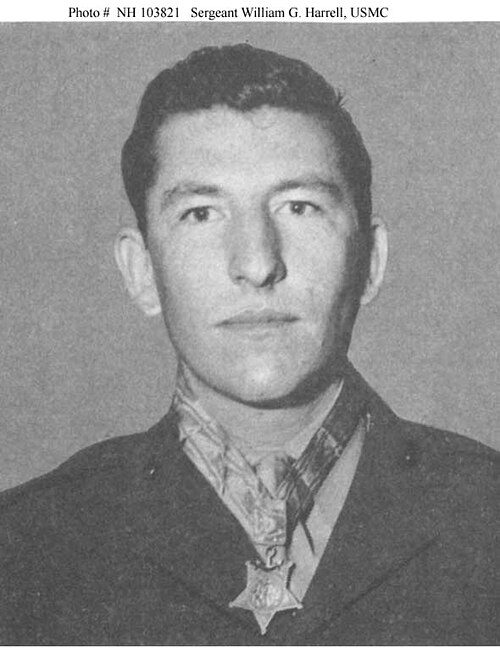
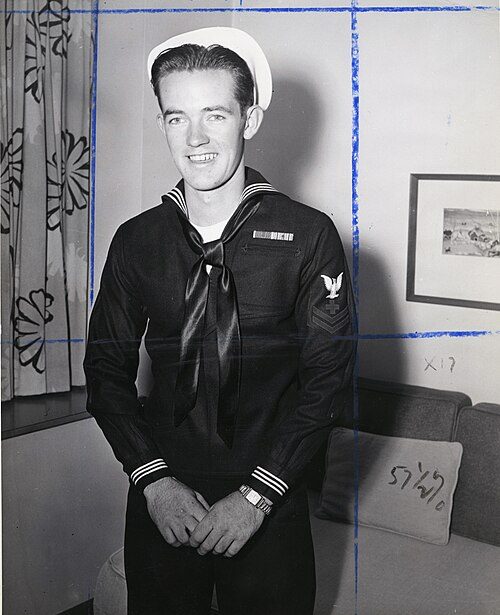
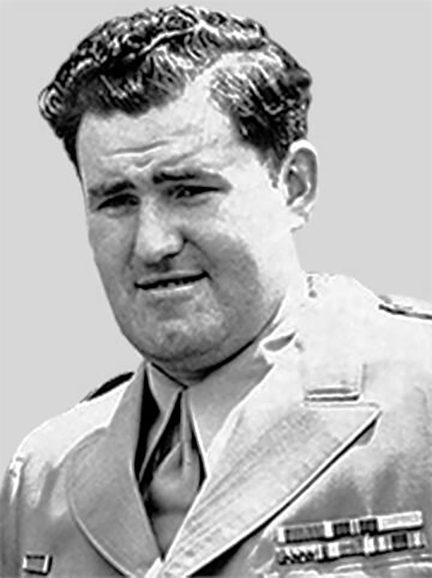
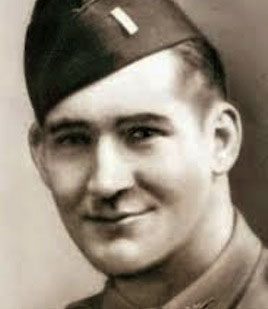
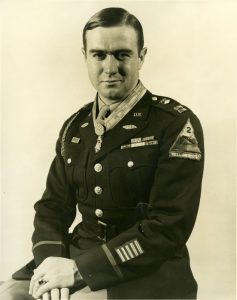
Private First Class William Robert Caddy was a Marine in the U.S. Marine Corps Reserve who was awarded the Medal of Honor posthumously for his actions on March 3, 1945 in Iwo Jima, Volcano Islands during World War II. At the time he was serving with Company I, 3d Battalion, 26th Marines, 5th Marine Division. Caddy was 19 years old.
Caddy was killed in the action for which his medal was awarded. 4 other service members also received the Medal of Honor for actions on the same day. The medal was presented on September 8, 1946.
Caddy was born on August 8, 1925 in Quincy, Norfolk County, Massachusetts. His Medal of Honor is credited to Massachusetts. He is buried at National Memorial Cemetery of the Pacific in Honolulu, Hawaii.
Caddy is one of 474 Medal of Honor recipients from World War II and one of 265 credited to Massachusetts.
Official Medal of Honor citation
For conspicuous gallantry and intrepidity at the risk of his life above and beyond the call of duty while serving as a rifleman with Company I, 3d Battalion, 26th Marines, 5th Marine Division, in action against enemy Japanese forces during the seizure of Iwo Jima in the Volcano Islands, 3 March 1945. Consistently aggressive, Pfc. Caddy boldly defied shattering Japanese machine-gun and small-arms fire to move forward with his platoon leader and another marine during the determined advance of his company through an isolated sector and, gaining the comparative safety of a shell hole, took temporary cover with his comrades. Immediately pinned down by deadly sniper fire from a well-concealed position, he made several unsuccessful attempts to again move forward and then, joined by his platoon leader, engaged the enemy in a fierce exchange of hand grenades until a Japanese grenade fell beyond reach in the shell hole. Fearlessly disregarding all personal danger, Pfc. Caddy instantly dived on the deadly missile, absorbing the exploding charge in his own body and protecting the others from serious injury. Stouthearted and indomitable, he unhesitatingly yielded his own life that his fellow marines might carry on the relentless battle against a fanatic enemy. His dauntless courage and valiant spirit of self-sacrifice in the face of certain death reflect the highest credit upon Pfc. Caddy and upon the U.S. Naval Service. He gallantly gave his life for his comrades.
Citation text: U.S. Government, public domain.
Wounds and death in action
What the citation records about his wounds:
Fearlessly disregarding all personal danger, Pfc. Caddy instantly dived on the deadly missile, absorbing the exploding charge in his own body and protecting the others from serious injury.
- Killed in action during the act for which the medal was awarded (March 3, 1945).
- Age at death: 19
- Resting place: National Memorial Cemetery of the Pacific
Other decorations and honors
Besides the Medal of Honor, William Robert Caddy received:
Source: Wikidata. Gold chips link to our guide to that decoration.
Battles and campaigns
Also served in: World War II.
Life beyond the battlefield
- Education: North Quincy High School
Source: Wikidata.
Places
Veteran resources, cemeteries and meeting places in Massachusetts →
Timeline
- August 8, 1925Born in Quincy, Norfolk County, Massachusetts
- March 3, 1945Act of valor — Iwo Jima, Volcano IslandsAge 19. Company I, 3d Battalion, 26th Marines, 5th Marine Division Killed in action.
- September 8, 1946Medal of Honor presented posthumously
- Resting placeNational Memorial Cemetery of the PacificHonolulu, Hawaii
Biography
William Robert Caddy (August 8, 1925 – March 3, 1945) was a United States Marine who sacrificed his life to save the lives of his platoon leader and platoon sergeant during the Battle of Iwo Jima. For his bravery, Caddy posthumously received his nation's highest military decoration – the Medal of Honor. He was the 72nd Marine of World War II to receive this honor. Caddy dropped out of high school after two years and worked. He gave most of his earnings to his mother before being drafted in the Marine Corps in 1943. Caddy attended training and was sent overseas to the Pacific Theatre of World War II aboard the USS Arthur Middleton.
From the Wikipedia article “William R. Caddy”, licensed under CC BY-SA 4.0. Read the full article →