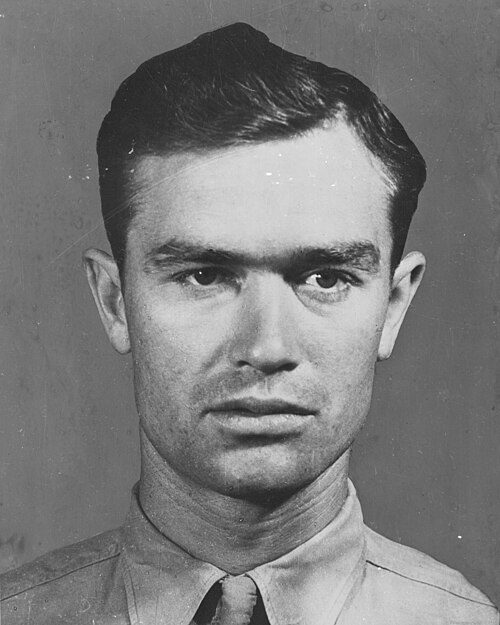
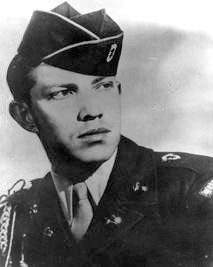
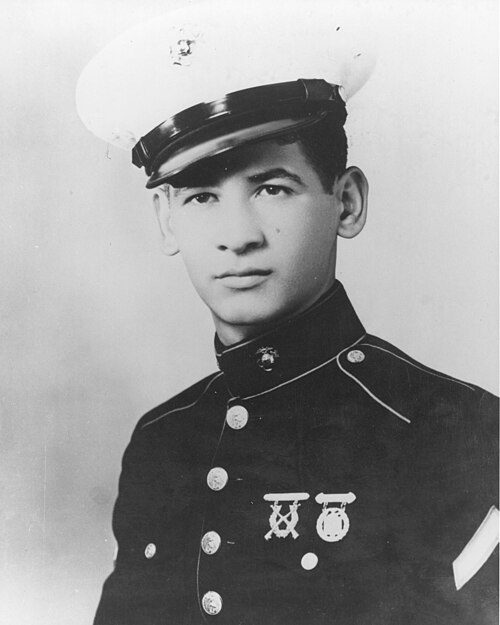
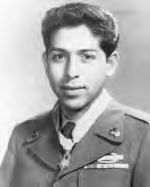
Serving as a sailor in the U.S. Navy, Lieutenant, j.g. John Kelvin Koelsch was awarded the Medal of Honor posthumously for his actions on July 3, 1951 near Wonsan, Korea during the Korean War. At the time he was serving with Navy Helicopter Rescue Unit, U.S.S. Princeton. Koelsch was 25 years old.
The medal was presented on August 2, 1955, 4 years after the action — the Pentagon, presented by Sec. of the Navy Charles S. Thomas to his Mother, Mrs. Beulah H. Koelsch.
Koelsch was born on December 22, 1925 in London, England — one of 98 recipients born in England. His Medal of Honor is credited to Los Angeles, Los Angeles County, California. Koelsch died on October 16, 1951 in Prison Camp, North Korea, at the age of 25. He is buried at Arlington National Cemetery in Arlington, Virginia.
Koelsch is one of 153 Medal of Honor recipients from the Korean War and one of 142 credited to California.
Official Medal of Honor citation
For conspicuous gallantry and intrepidity at the risk of his life above and beyond the call of duty while serving with a Navy helicopter rescue unit. Although darkness was rapidly approaching when information was received that a marine aviator had been shot down and was trapped by the enemy in mountainous terrain deep in hostile territory, Lt. (j.g.) Koelsch voluntarily flew a helicopter to the reported position of the downed airman in an attempt to effect a rescue. With an almost solid overcast concealing everything below the mountain peaks, he descended in his unarmed and vulnerable aircraft without the accompanying fighter escort to an extremely low altitude beneath the cloud level and began a systematic search. Despite the increasingly intense enemy fire, which struck his helicopter on one occasion, he persisted in his mission until he succeeded in locating the downed pilot, who was suffering from serious burns on the arms and legs. While the victim was being hoisted into the aircraft, it was struck again by an accurate burst of hostile fire and crashed on the side of the mountain. Quickly extricating his crewmen and the aviator from the wreckage, Lt. (j.g.) Koelsch led them from the vicinity in an effort to escape from hostile troops, evading the enemy forces for nine days and rendering such medical attention as possible to his severely burned companion until all were captured. Up to the time of his death while still a captive of the enemy, Lt. (j.g.) Koelsch steadfastly refused to aid his captors in any manner and served to inspire his fellow prisoners by his fortitude and consideration for others. His great personal valor and heroic spirit of self-sacrifice throughout sustain and enhance the finest traditions of the U.S. Naval Service.
Citation text: U.S. Government, public domain.
Wounds and injuries
What the citation records about his wounds:
Despite the increasingly intense enemy fire, which struck his helicopter on one occasion, he persisted in his mission until he succeeded in locating the downed pilot, who was suffering from serious burns on the arms and legs.
- Awarded posthumously — died October 16, 1951.
- Age at death: 25
- Resting place: Arlington National Cemetery
Timeline
- December 22, 1925Born in London, England
- July 3, 1951Act of valor — near Wonsan, KoreaAge 25. Navy Helicopter Rescue Unit, U.S.S. Princeton
- October 16, 1951Died in Prison Camp, North KoreaAge 25.
- August 2, 1955Medal of Honor presented posthumouslyThe Pentagon, presented by Sec. of the Navy Charles S. Thomas to his Mother, Mrs. Beulah H. Koelsch
- Resting placeArlington National CemeteryArlington, Virginia