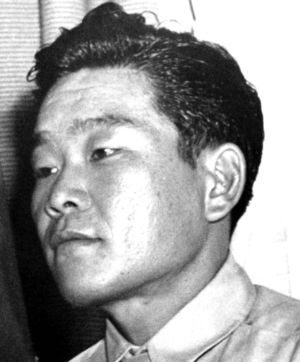
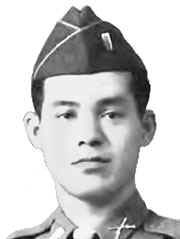
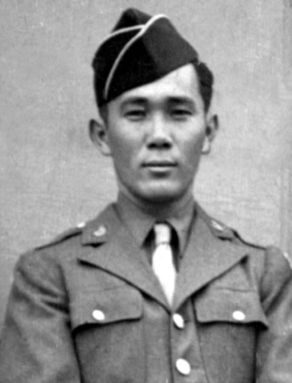
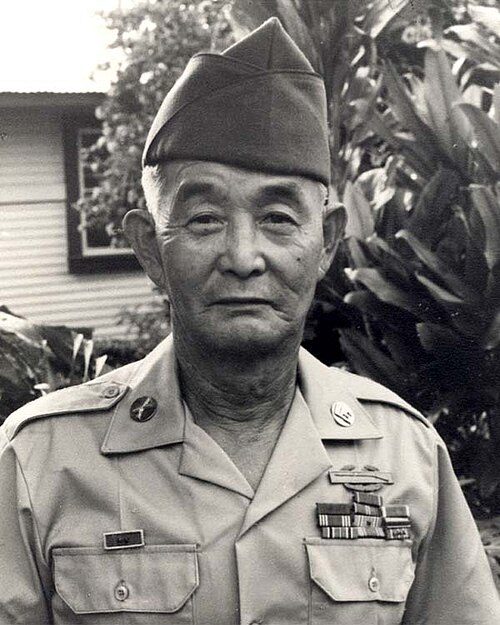
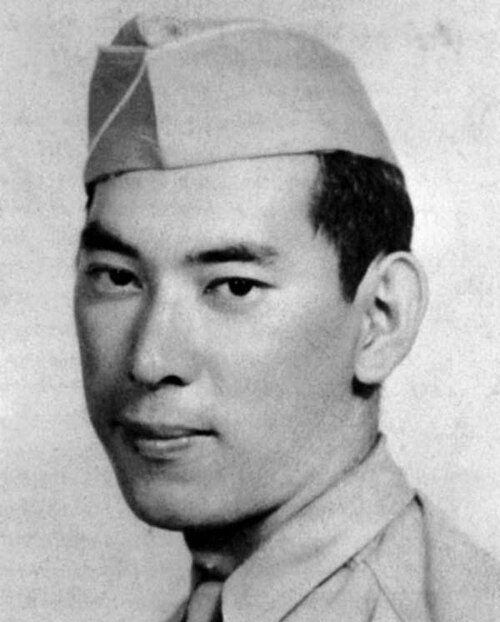
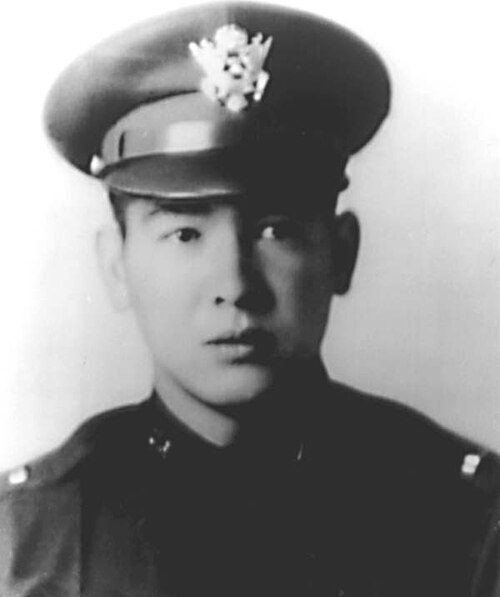
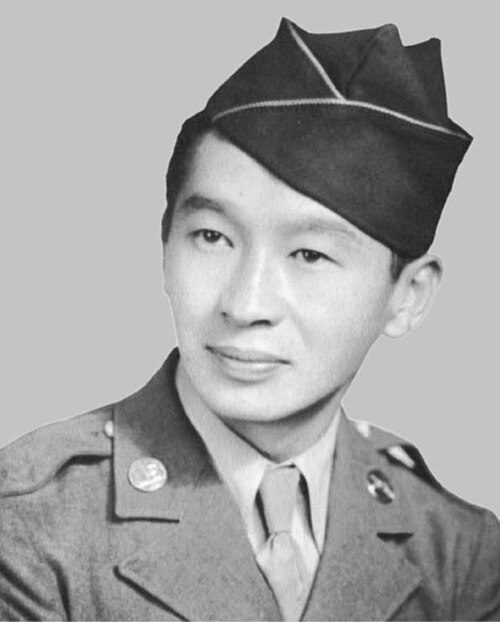
Private Mikio Hasemoto, a soldier in the U.S. Army, was awarded the Medal of Honor posthumously for gallantry on November 29, 1943 in the vicinity of Cerasuolo, Italy during World War II. At the time he was serving with Company B, 100th Infantry Battalion (Separate). Hasemoto was 27 years old.
One other service member also received the Medal of Honor for actions on the same day. The medal was presented on June 21, 2000, 56 years after the action — the White House - presented by President William J. Clinton to his sister Mitsuko Tanaka.
Hasemoto was born on July 16, 1916 in Waipahu, Honolulu County, Hawaii. Hasemoto died on December 1, 1943 in in the vicinity of Cerasuolo, Italy, at the age of 27. He is buried at National Memorial Cemetery of the Pacific in Honolulu, Hawaii.
Hasemoto is one of 474 Medal of Honor recipients from World War II and one of 20 credited to Hawaii.
Official Medal of Honor citation
For conspicuous gallantry and intrepidity at risk of his life above and beyond the call of duty.Private Mikio Hasemoto distinguished himself by extraordinary heroism in action on 29 November 1943, in the vicinity of Cerasuolo, Italy. A force of approximately 40 enemy soldiers, armed with machine guns, machine pistols, rifles, and grenades, attacked the left flank of his platoon. Two enemy soldiers with machine guns advanced forward firing their weapons. Private Hasemoto, an automatic rifleman, challenged these two machine gunners. After firing four magizines at the approaching enemy, his weapon was shot and damaged. Unhesitatingly, he ran 10 yards to the rear, secured another automatic rifle and continued to fire until his weapon jammed. At this point, Private Hasemoto and his squad leader had killed approximately 20 enemy soldiers. Again, Private Hasemoto ran through a barrage of enemy machine gun fire to pick up an M-1 rifle. Continuing their fire, Private Hasemoto and his squad leader killed 10 more enemy soldiers. With only three enemy soldiers left, he and his squad leader charged courageously forward, killing one, wounding one, and capturing another. The following day, Private Hasemoto continued to repel enemy attacks until he was killed by enemy fire. Private Hasemoto's extraordinary heroism and devotion to duty are in keeping with the highest traditions of military service and reflect great credit on him, his unit, and the United States Army.
Citation text: U.S. Government, public domain.
Other decorations and honors
Besides the Medal of Honor, Mikio Hasemoto received:
Source: Wikidata. Gold chips link to our guide to that decoration.
Battles and campaigns
Also served in: World War II.
Places
Veteran resources, cemeteries and meeting places in Hawaii →
Timeline
- July 16, 1916Born in Waipahu, Honolulu County, Hawaii
- November 29, 1943Act of valor — in the vicinity of Cerasuolo, ItalyAge 27. Company B, 100th Infantry Battalion (Separate)
- December 1, 1943Died in in the vicinity of Cerasuolo, ItalyAge 27.
- June 21, 2000Medal of Honor presented posthumouslyThe White House - presented by President William J. Clinton to his sister Mitsuko Tanaka
- Resting placeNational Memorial Cemetery of the PacificHonolulu, Hawaii
Biography
Mikio Hasemoto (Japanese: 長谷本 幹夫, July 13, 1916 – November 29, 1943) was a soldier in United States Army. He is best known as a recipient of the Medal of Honor in World War II during actions in Cerasuolo, Italy.
From the Wikipedia article “Mikio Hasemoto”, licensed under CC BY-SA 4.0. Read the full article →