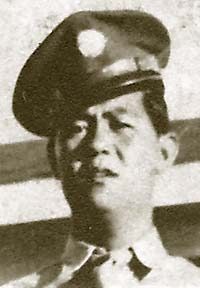
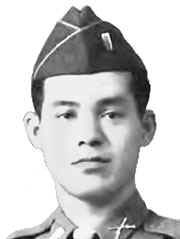
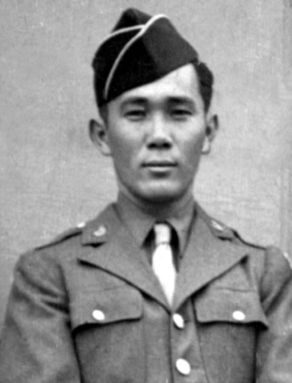
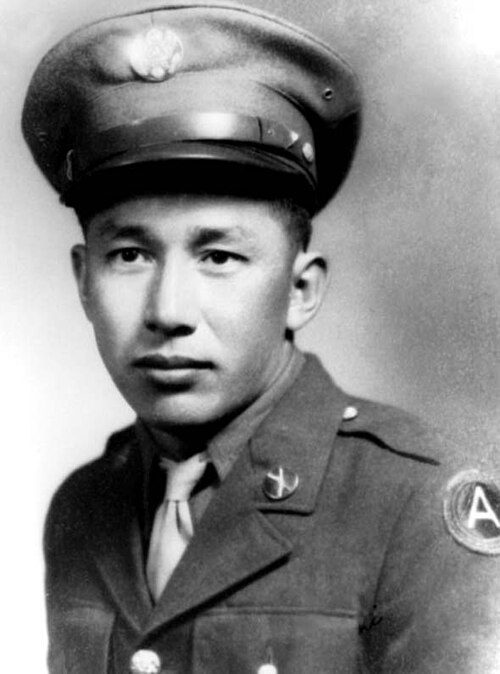
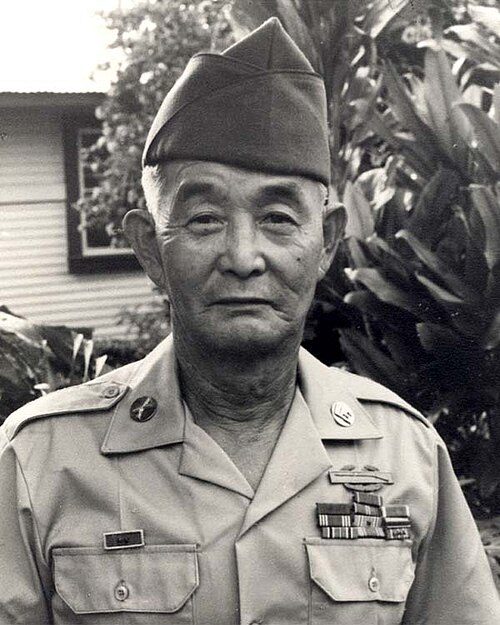
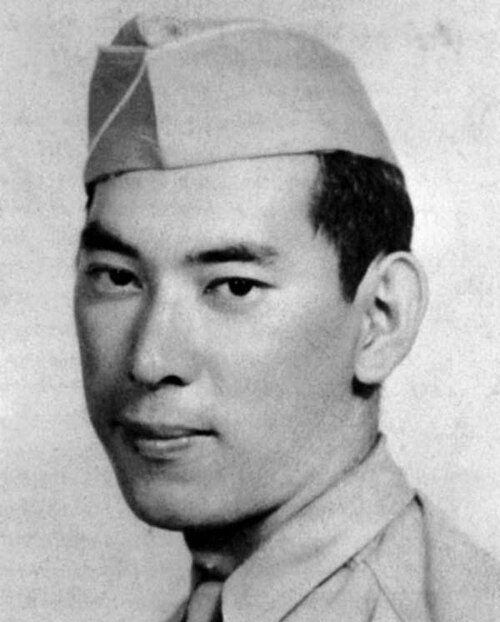
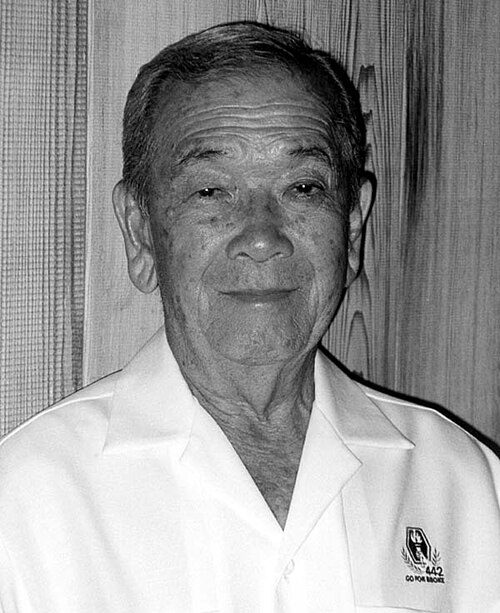
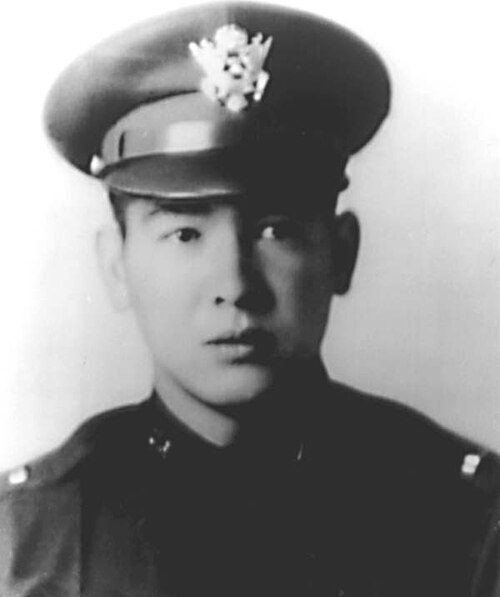
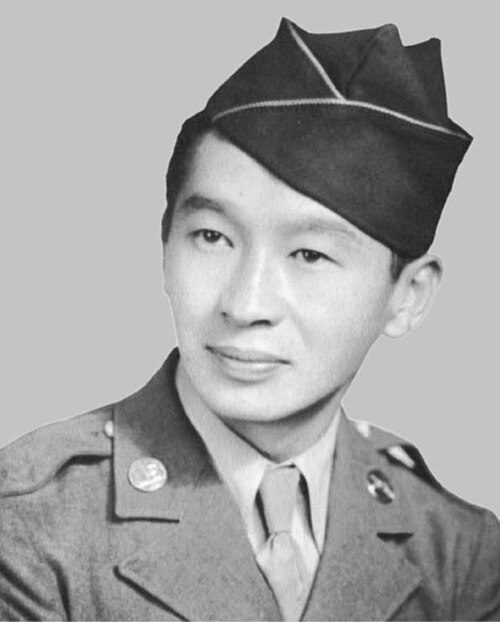
Serving as a soldier in the U.S. Army, Staff Sergeant Allan Masaharu Ohata was awarded the Medal of Honor posthumously for his actions on November 30, 1943 near Cerasuolo, Italy during World War II. At the time he was serving with Company B, 100th Infantry Battalion (Separate). Ohata was 25 years old.
The medal was presented on June 21, 2000, 56 years after the action — the White House - presented by President William J. Clinton to his brother Donald Ohata. He later rose to the rank of then Sergeant.
Ohata was born on September 13, 1918 in Honolulu, Oahu, Honolulu County, Hawaii. Ohata died on October 17, 1977 in Honolulu, Hawaii, at the age of 59. He is buried at National Memorial Cemetery of the Pacific in Honolulu, Hawaii.
Ohata is one of 474 Medal of Honor recipients from World War II and one of 20 credited to Hawaii.
Official Medal of Honor citation
For conspicuous gallantry and intrepidity at risk of his life above and beyond the call of duty. Sergeant Allan M. Ohata distinguished himself by extraordinary heroism in action on 29 and 30 November 1943, near Cerasuolo, Italy. Sergeant Ohata, his squad leader, and three men were ordered to protect his platoon's left flank against an attacking enemy force of 40 men, armed with machine guns, machine pistols, and rifles. He posted one of his men, an automatic rifleman, on the extreme left, 15 yards from his own position. Taking his position, Sergeant Ohata delivered effective fire against the advancing enemy. The man to his left called for assistance when his automatic rifle was shot and damaged. With utter disregard for his personal safety, Sergeant Ohataleft his position and advanced 15 yards through heavy machine gun fire. Reaching his comrade's position, he immedimately fired upon the enemy, killing 10 enemy soldiers and successfully covering his comrade's withdrawl to replace his damaged weapon. Sergeant Ohata and the automatic rifleman held their position and killed 37 enemy soldiers. Both men then charged the three remaining soldiers and captured them. Later, Sergeant Ohata and the automatic rifleman stopped another attacking force of 14, killing four and wounding three while the others fled. The following day he and the automatic rifleman held their flank with grim determination and staved off all atacks. Staff Sergeant Ohata's extraordinary heroism and devotion to duty are in keeping with the highest traditions of military service and reflect great credit on him, his unit, and the United States Army.
Citation text: U.S. Government, public domain.
Battles and campaigns
Also served in: World War II.
Places
Veteran resources, cemeteries and meeting places in Hawaii →
Timeline
- September 13, 1918Born in Honolulu, Oahu, Honolulu County, Hawaii
- November 30, 1943Act of valor — near Cerasuolo, ItalyAge 25. Company B, 100th Infantry Battalion (Separate)
- October 17, 1977Died in Honolulu, HawaiiAge 59.
- June 21, 2000Medal of Honor presented posthumouslyThe White House - presented by President William J. Clinton to his brother Donald Ohata
- Resting placeNational Memorial Cemetery of the PacificHonolulu, Hawaii
Biography
Allan Masaharu Ohata (Japanese: 大畠 正春, September 13, 1918 – October 17, 1977) was a United States Army soldier. He is best known for receiving the Medal of Honor because of his actions in World War II.
From the Wikipedia article “Allan M. Ohata”, licensed under CC BY-SA 4.0. Read the full article →