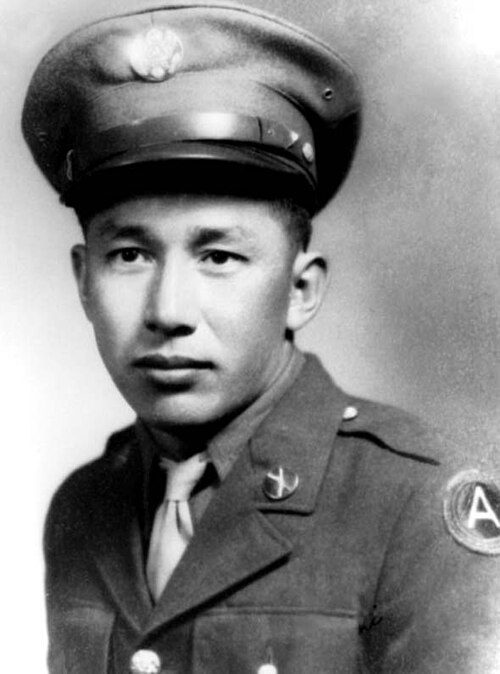
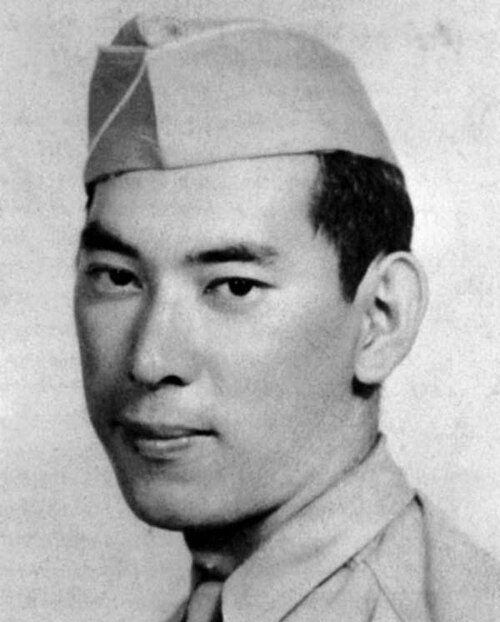
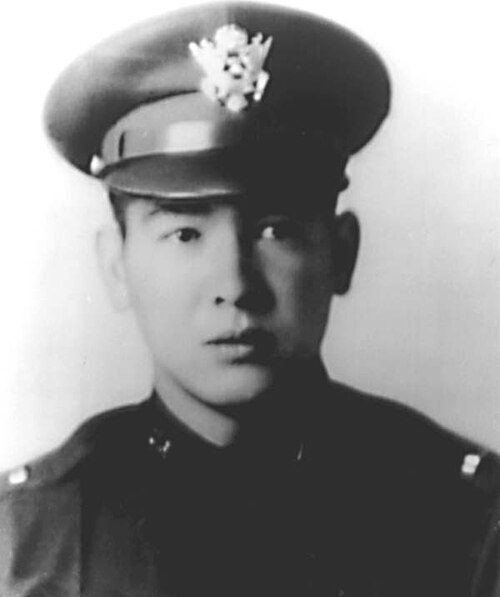
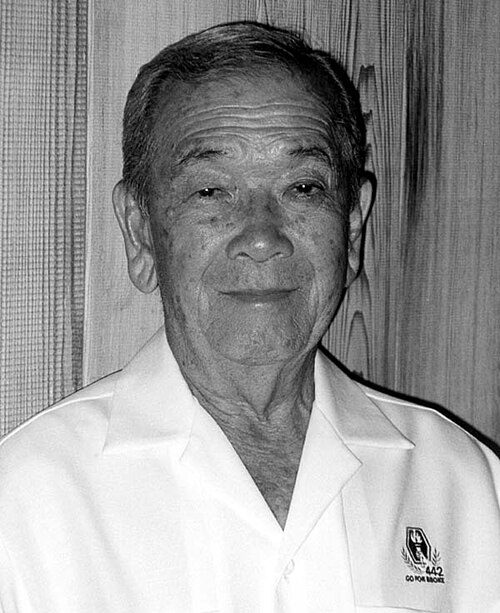
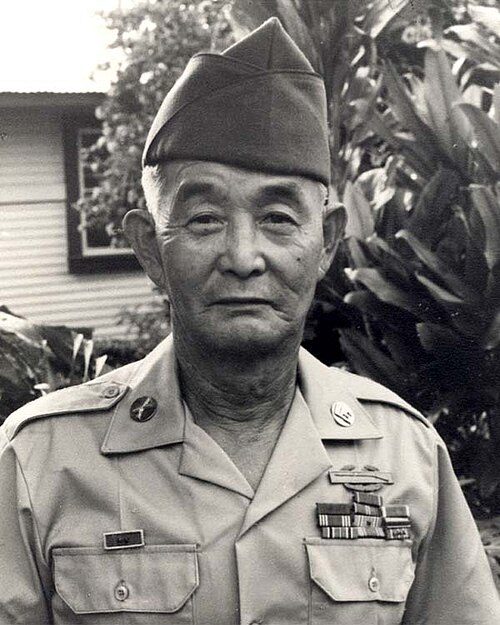
Serving as a soldier in the U.S. Army, Private Masato Nakae was awarded the Medal of Honor posthumously for his actions on August 19, 1944 near Pisa, Italy during World War II. At the time he was serving with Company A, 100th Infantry Battalion, 442d Regimental Combat Team. Nakae was 26 years old.
The medal was presented on June 21, 2000, 55 years after the action — the White House - presented by President William J. Clinton to his daughter Mrs. Anna Kuroda.
Nakae was born on December 20, 1917 in Haena, Kauai County, Hawaii. His Medal of Honor is credited to Honolulu, Oahu, Honolulu County, Hawaii. Nakae died on September 4, 1998 in Kaneohe, Oahu, Hawaii, at the age of 80. He is buried at National Memorial Cemetery of the Pacific in Honolulu, Hawaii.
Nakae is one of 474 Medal of Honor recipients from World War II and one of 20 credited to Hawaii.
Official Medal of Honor citation
For conspicuous gallantry and intrepidity at risk of his life above and beyond the call of duty. Private Masato Nakae distinguished himself by extraordinary heroism in action on 19 August 1944, near Pisa, Italy. When his submachine gun was damaged by a shell fragment during a fierce attack by a superior enemy force, Privte Nakae quickly picked up his wounded comrade's M-1 rifle and fired rifle grenades at the steadily advancing enemy. As the hostile force continued to close in on his position, Private Nakae threw six grenades and forced them to withdraw. During a concentrated enemy mortar barrage that preceded the next assault by the enemy force, a mortar shell fragment seriously wounded Private Nakae. Despite his injury, he refused to surrended his position and continued firing at the advancing enemy. By inflicting heavy casualties on the enemy force, he finally succeeded in breaking up the attack and caused the enemy to withdraw. Private Nakae's extraordinary heroism and devotion to duty are in keeping with the highest traditions of military service and reflect great credit on him, his unit, and the United States Army.
Citation text: U.S. Government, public domain.
Wounds and injuries
What the citation records about his wounds:
During a concentrated enemy mortar barrage that preceded the next assault by the enemy force, a mortar shell fragment seriously wounded Private Nakae.
Despite his injury, he refused to surrended his position and continued firing at the advancing enemy.
- Awarded posthumously — died September 4, 1998.
- Age at death: 80
- Resting place: National Memorial Cemetery of the Pacific
Other decorations and honors
Besides the Medal of Honor, Masato Nakae received:
Source: Wikidata. Gold chips link to our guide to that decoration.
Battles and campaigns
Also served in: World War II.
Places
Veteran resources, cemeteries and meeting places in Hawaii →
Timeline
- December 20, 1917Born in Haena, Kauai County, Hawaii
- August 19, 1944Act of valor — near Pisa, ItalyAge 26. Company A, 100th Infantry Battalion, 442d Regimental Combat Team
- September 4, 1998Died in Kaneohe, Oahu, HawaiiAge 80.
- June 21, 2000Medal of Honor presented posthumouslyThe White House - presented by President William J. Clinton to his daughter Mrs. Anna Kuroda
- Resting placeNational Memorial Cemetery of the PacificHonolulu, Hawaii
Biography
Masato Nakae (Japanese: 中江 正人, December 20, 1917 – September 4, 1998) was a Japanese American United States Army soldier. He is best known for receiving the Medal of Honor because of his actions in World War II.
From the Wikipedia article “Masato Nakae”, licensed under CC BY-SA 4.0. Read the full article →