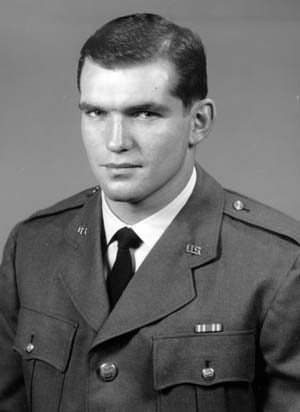
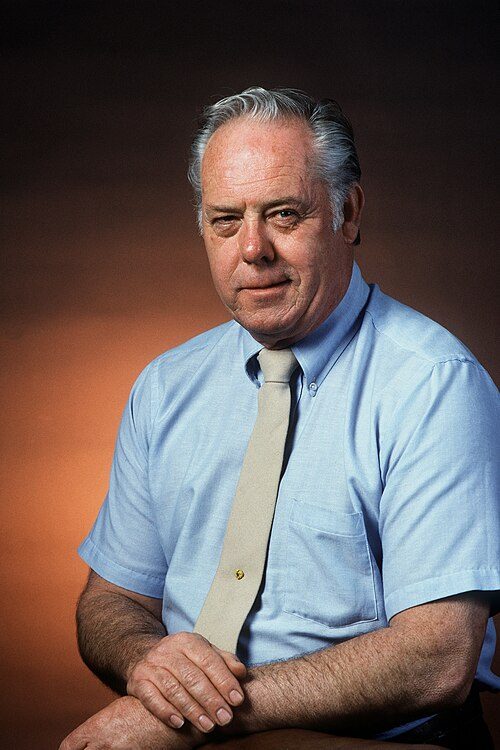
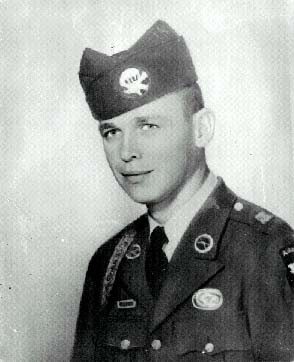
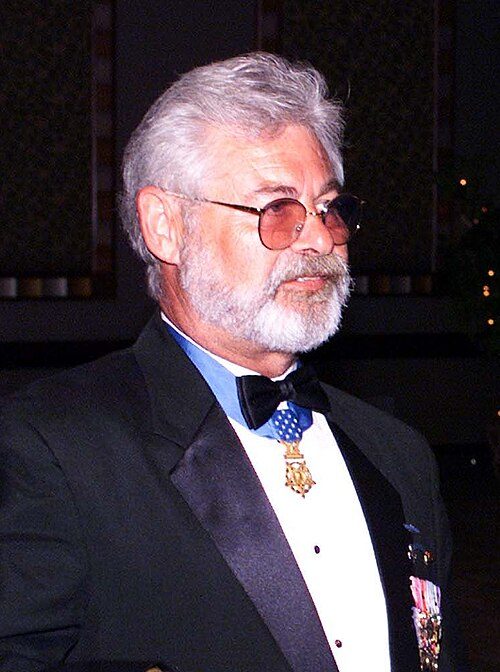
Serving as a soldier in the U.S. Army, First Lieutenant James Allen Taylor received the Medal of Honor for his actions on November 9, 1967 west of Que Son, Republic of Vietnam during the Vietnam War. At the time he was serving with Troop B, 1st Squadron, 1st Cavalry, Americal Division. Taylor was 29 years old.
2 other service members also received the Medal of Honor for actions on the same day. The medal was presented on November 19, 1968 — the White House, presented by Pres. Lyndon B. Johnson. He later rose to the rank of Major.
Taylor was born on December 31, 1937 in Arcata, Humboldt County, California. His Medal of Honor is credited to San Francisco, San Francisco County, California. Taylor is one of the living Medal of Honor recipients.
Taylor is one of 274 Medal of Honor recipients from the Vietnam War and one of 142 credited to California.
Official Medal of Honor citation
Capt. Taylor, Armor, was serving as executive officer of Troop B, 1st Squadron. His troop was engaged in an attack on a fortified position west of Que Son when it came under intense enemy recoilless-rifle, mortar, and automatic-weapons fire from an enemy strong point located immediately to its front. One armored cavalry assault vehicle was hit immediately by recoilless-rifle fire and all five crewmembers were wounded. Aware that the stricken vehicle was in grave danger of exploding, Capt. Taylor rushed forward and personally extracted the wounded to safety despite the hail of enemy fire and exploding ammunition. Within minutes a second armored cavalry assault vehicle was hit by multiple recoilless-rifle rounds. Despite the continuing intense enemy fire, Capt. Taylor moved forward on foot to rescue the wounded men from the burning vehicle and personally removed all the crewmen to the safety of a nearby dike. Moments later the vehicle exploded. As he was returning to his vehicle, a bursting mortar round painfully wounded Capt. Taylor yet he valiantly returned to his vehicle to relocate the medical evacuation zone to an area closer to the front lines. As he was moving his vehicle, it came under machine- gun fire from an enemy position not 50 yards away. Capt. Taylor engaged the position with his machine gun, killing the three-man crew. Upon arrival at the new evacuation site, still another vehicle was struck. Once again Capt. Taylor rushed forward and pulled the wounded from the vehicle, loaded them aboard his vehicle, and returned them safely to the evacuation site. His actions of unsurpassed valor were a source of inspiration to his entire troop, contributed significantly to the success of the overall assault on the enemy position, and were directly responsible for saving the lives of a number of his fellow soldiers. His actions were in keeping with the highest traditions of the military profession and reflect great credit upon himself, his unit, and the U.S. Army.
Citation text: U.S. Government, public domain.
Wounds and injuries
What the citation records about his wounds:
As he was returning to his vehicle, a bursting mortar round painfully wounded Capt. Taylor yet he valiantly returned to his vehicle to relocate the medical evacuation zone to an area closer to the front lines.
Battles and campaigns
Also served in: Vietnam War.
Life beyond the battlefield
- Education: Arcata High School
Source: Wikidata.
Places
- Born: Arcata — map
Veteran resources, cemeteries and meeting places in California →
Timeline
- December 31, 1937Born in Arcata, Humboldt County, California
- November 9, 1967Act of valor — west of Que Son, Republic of VietnamAge 29. Troop B, 1st Squadron, 1st Cavalry, Americal Division
- November 19, 1968Medal of Honor presentedThe White House, presented by Pres. Lyndon B. Johnson
Biography
James Allen Taylor (born December 31, 1937) is a retired United States Army officer and a recipient of the United States military's highest decoration—the Medal of Honor—for his actions in the Vietnam War.
From the Wikipedia article “James Allen Taylor”, licensed under CC BY-SA 4.0. Read the full article →
Videos
Videos load from Vimeo only after you press play.