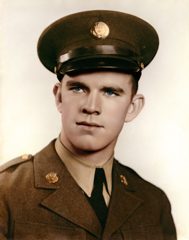
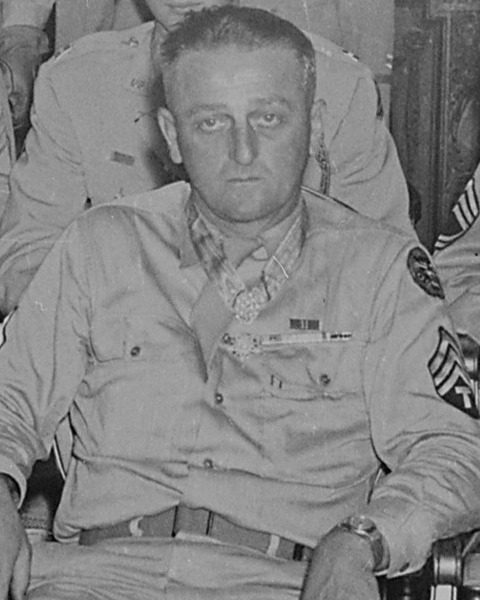
Staff Sergeant Herschel Floyd "pete" Briles was a soldier in the U.S. Army who received the Medal of Honor for his actions on November 20, 1944 in Scherpenseel, Germany during World War II. At the time he was serving with Company C, 899th Tank Destroyer Battalion, 9th Infantry Division (attached to). Briles was 30 years old.
One other service member also received the Medal of Honor for actions on the same day. The medal was presented on August 23, 1945. He later rose to the rank of First Sergeant.
Briles was born on February 7, 1914 in Colfax, Jasper County, Iowa. His Medal of Honor is credited to Fort Des Moines, Polk County, Iowa. Briles died on July 17, 1994 in Mitchellville, Iowa, at the age of 80. He is buried at Waveland Cemetery in Prairie City, Iowa.
Briles is one of 474 Medal of Honor recipients from World War II and one of 55 credited to Iowa.
Official Medal of Honor citation
He was leading a platoon of destroyers across an exposed slope near Scherpenseel, Germany, on 20 November 1944, when they came under heavy enemy artillery fire. A direct hit was scored on one of the vehicles, killing one man, seriously wounding two others, and setting the destroyer afire. With a comrade, SSgt. Briles left the cover of his own armor and raced across ground raked by artillery and small-arms fire to the rescue of the men in the shattered destroyer. Without hesitation, he lowered himself into the burning turret, removed the wounded, and then extinguished the fire. From a position he assumed the next morning, he observed hostile infantrymen advancing. With his machine gun, he poured such deadly fire into the enemy ranks that an entire pocket of 55 Germans surrendered, clearing the way for a junction between American units which had been held up for two days. Later that day, when another of his destroyers was hit by a concealed enemy tank, he again left protection to give assistance. With the help of another soldier, he evacuated two wounded under heavy fire and, returning to the burning vehicle, braved death from exploding ammunition to put out the flames. By his heroic initiative and complete disregard for personal safety, SSgt. Briles was largely responsible for causing heavy enemy casualties, forcing the surrender of 55 Germans, making possible the salvage of our vehicles, and saving the lives of wounded comrades.
Citation text: U.S. Government, public domain.
Wounds and injuries
What the citation records about his wounds:
With the help of another soldier, he evacuated two wounded under heavy fire and, returning to the burning vehicle, braved death from exploding ammunition to put out the flames.
- Age at death: 80
- Resting place: Waveland Cemetery
Battles and campaigns
Also served in: World War II.
Places
Timeline
- February 7, 1914Born in Colfax, Jasper County, Iowa
- November 20, 1944Act of valor — Scherpenseel, GermanyAge 30. Company C, 899th Tank Destroyer Battalion, 9th Infantry Division (attached to)
- August 23, 1945Medal of Honor presented
- July 17, 1994Died in Mitchellville, IowaAge 80.
- Resting placeWaveland CemeteryPrairie City, Iowa
Biography
Herschel Floyd Briles (February 7, 1914 – July 17, 1994) was a United States Army soldier and a recipient of the United States military's highest decoration—the Medal of Honor—for his actions in World War II.
From the Wikipedia article “Herschel F. Briles”, licensed under CC BY-SA 4.0. Read the full article →