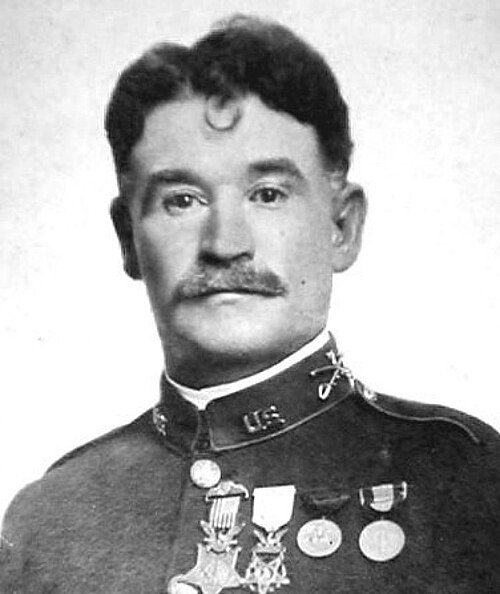
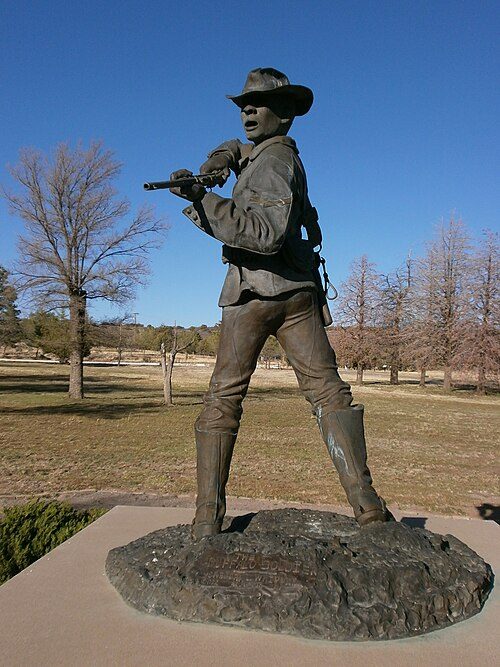
Serving as a soldier in the U.S. Army, Private Herman Ziegner received the Medal of Honor for his actions on December 29, 1890 at Wounded Knee Creek and White Clay Creek, South Dakota during the Indian Campaigns. At the time he was serving with Company E, 7th U.S. Cavalry. Ziegner was about 26 years old.
18 other service members also received the Medal of Honor for actions on the same day. The medal was presented on June 23, 1891.
Ziegner was born in 1864 in Aploda, Germany — one of 130 recipients born in Germany. His Medal of Honor is credited to Baltimore, Baltimore County, Maryland. Ziegner died on September 9, 1898 in New York, at the age of about 34. He is buried at Calvary Cemetery in Woodside, New York.
Ziegner is one of 426 Medal of Honor recipients from the Indian Campaigns and one of 85 credited to Maryland.
Official Medal of Honor citation
Conspicuous bravery.
Citation text: U.S. Government, public domain.
Battles and campaigns
Also served in: American Indian Wars, Spanish–American War.
Places
Veteran resources, cemeteries and meeting places in Maryland →
Timeline
- 1864Born in Aploda, Germany
- December 29, 1890Act of valor — Wounded Knee Creek and White Clay Creek, South DakotaAge about 26. Company E, 7th U.S. Cavalry
- June 23, 1891Medal of Honor presented
- September 9, 1898Died in New YorkAge about 34.
- Resting placeCalvary CemeteryWoodside, New York
Biography
Herman or Hermann Ziegner (1864 – September 9, 1898) was a German-American soldier who served in the U.S. Army during the Indian Wars and the Spanish–American War. In 1891, he was one of twenty men to receive the Medal of Honor at the Battle of Wounded Knee., now called the Wounded Knee Massacre. He was also a non-commissioned officer of 71st New York Volunteer Infantry Regiment, taking part in the Santiago campaign and the charge up San Juan Hill, and was one of many regimental members who died from malnourishment and malaria prior to and shortly after returning to the United States.
From the Wikipedia article “Hermann Ziegner”, licensed under CC BY-SA 4.0. Read the full article →