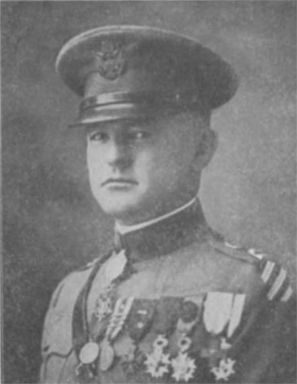
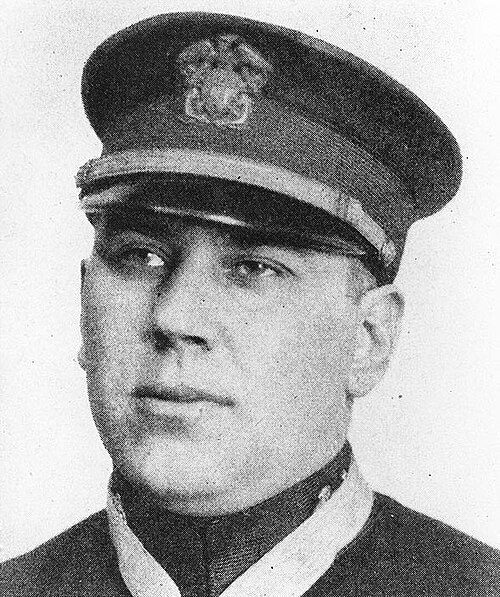
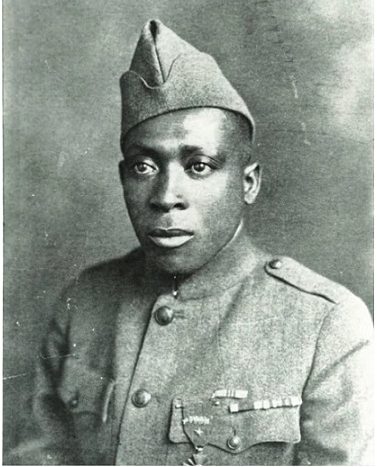
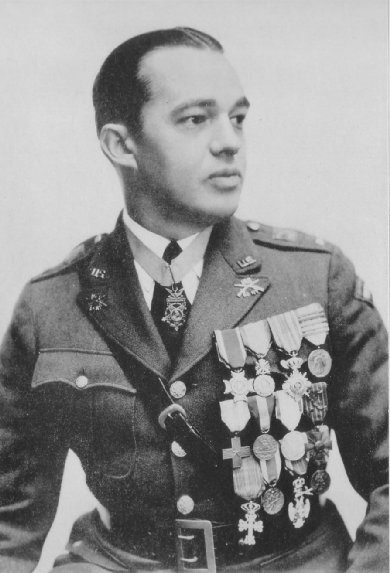
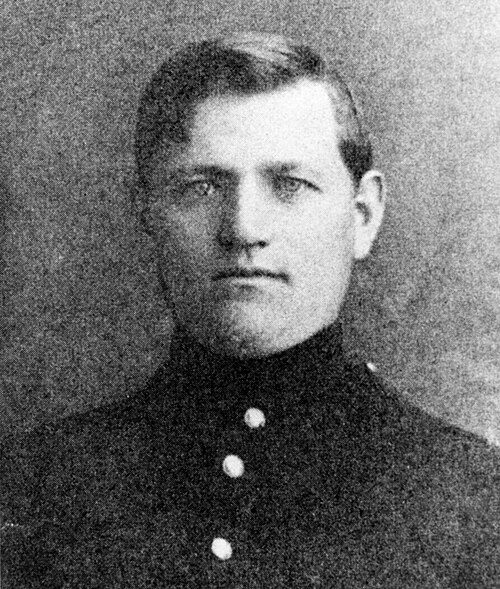
Captain George G. McMurtry, a soldier in the U.S. Army, received the Medal of Honor for gallantry between October 2 and 8, 1918 in Argonne Forest, at Charlevaux, France during World War I. At the time he was serving with 1st Battalion, 308th Infantry, 77th Division. McMurtry was 41 years old.
2 other service members also received the Medal of Honor for actions on the same day. The medal was presented on February 9, 1919. Chaumont, France - presented by General John J. Pershing. He later rose to the rank of Major.
McMurtry was born on November 6, 1876 in Pittsburgh, Allegheny County, Pennsylvania. His Medal of Honor is credited to New York, New York. McMurtry died on November 22, 1958 in New York, New York, at the age of 82. He is buried at Ledge Lawn Cemetery in Bar Harbor, Maine. His medal is held by National Museum of American History, Smithsonian Institution, Washington, DC.
McMurtry is one of 132 Medal of Honor recipients from World War I and one of 678 credited to New York.
Official Medal of Honor citation
Commanded a battalion which was cut off and surrounded by the enemy and although wounded in the knee by shrapnel on 4 October and suffering great pain, he continued throughout the entire period to encourage his officers and men with a resistless optimism that contributed largely toward preventing panic and disorder among the troops, who were without food, cut off from communication with our lines. On 4 October during a heavy barrage, he personally directed and supervised the moving of the wounded to shelter before himself seeking shelter. On 6 October he was again wounded in the shoulder by a German grenade, but continued personally to organize and direct the defense against the German attack on the position until the attack was defeated. He continued to direct and command his troops, refusing relief, and personally led his men out of the position after assistance arrived before permitting himself to be taken to the hospital on 8 October. During this period the successful defense of the position was due largely to his efforts.
Citation text: U.S. Government, public domain.
Wounds and injuries
What the citation records about his wounds:
Commanded a battalion which was cut off and surrounded by the enemy and although wounded in the knee by shrapnel on 4 October and suffering great pain, he continued throughout the entire period to encourage his officers and men with a resistless optimism that contributed largely toward preventing panic and disorder among the troops, who were without food, cut off from communication with our lines.
On 6 October he was again wounded in the shoulder by a German grenade, but continued personally to organize and direct the defense against the German attack on the position until the attack was defeated.
- Age at death: 82
- Resting place: Ledge Lawn Cemetery
Battles and campaigns
Also served in: World War I, Spanish–American War.
Life beyond the battlefield
- Education: Harvard University, Harvard College
Source: Wikidata.
Places
Veteran resources, cemeteries and meeting places in New York →
Timeline
- November 6, 1876Born in Pittsburgh, Allegheny County, Pennsylvania
- October 2 - 8, 1918Act of valor — Argonne Forest, at Charlevaux, FranceAge 41. 1st Battalion, 308th Infantry, 77th Division
- February 9, 1919Medal of Honor presentedChaumont, France - presented by General John J. Pershing
- November 22, 1958Died in New York, New YorkAge 82.
- Resting placeLedge Lawn CemeteryBar Harbor, Maine
Biography
George Gibson McMurtry (November 6, 1876 – November 22, 1958) was a United States Army officer, a Medal of Honor recipient and a Harvard Graduate 1899. He first served in the Army as a member of the Rough Riders during the Spanish–American War. He received the Medal of Honor as the executive officer of the Lost Battalion during World War I.
From the Wikipedia article “George G. McMurtry”, licensed under CC BY-SA 4.0. Read the full article →
Videos
Videos load from Vimeo only after you press play.