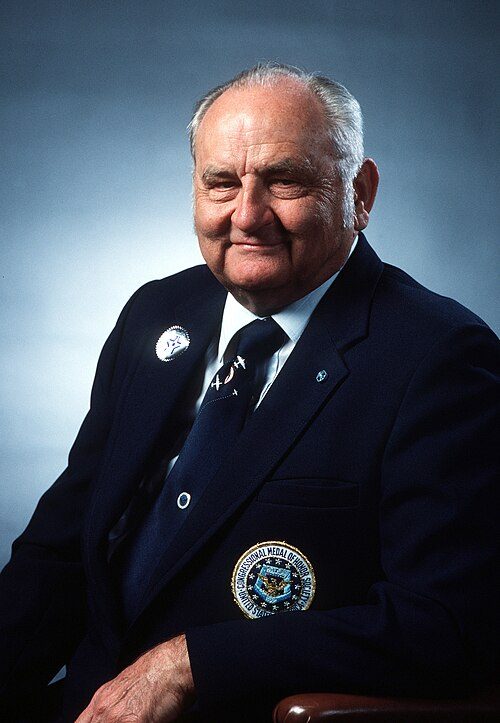
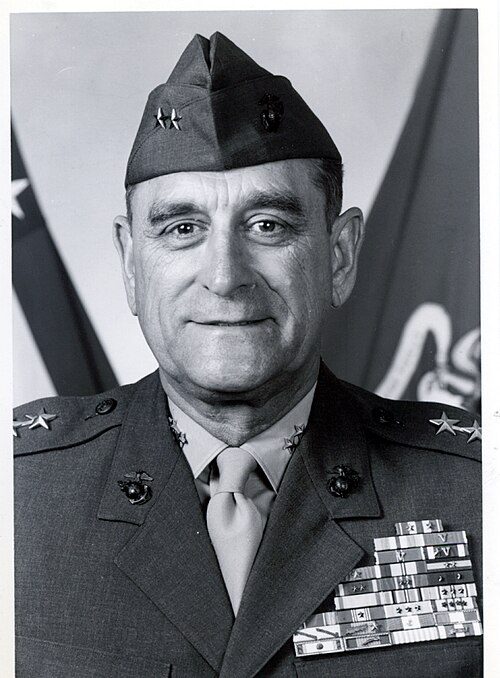
Commander Eugene Bennett Fluckey, a sailor in the U.S. Navy, received the Medal of Honor for gallantry on December 19, 1944 at Namkwan Harbor along coast of China, China during World War II. At the time he was serving with U.S.S. Barb (SS220). Fluckey was 31 years old.
2 other service members also received the Medal of Honor for actions on the same day. The medal was presented on March 23, 1945. Washington, D.C., presented by the Sec. of the Navy James V. Forrestal. He later rose to the rank of Rear Admiral.
Fluckey was born on October 5, 1913 in Washington, District of Columbia. His Medal of Honor is credited to Neoga, Cumberland County, Illinois. Fluckey died on June 28, 2007 in Annapolis, Maryland, at the age of 93. He is buried at U.S. Naval Academy Cemetery in Annapolis, Maryland.
Fluckey is one of 474 Medal of Honor recipients from World War II and one of 210 credited to Illinois.
Official Medal of Honor citation
For conspicuous gallantry and intrepidity at the risk of his life above and beyond the call of duty as commanding officer of the U.S.S. Barb during her 11th war patrol along the east coast of China from 19 December 1944 to 15 February 1945. After sinking a large enemy ammunition ship and damaging additional tonnage during a running two-hour night battle on 8 January, Comdr. Fluckey, in an exceptional feat of brilliant deduction and bold tracking on 25 January, located a concentration of more than 30 enemy ships in the lower reaches of Nankuan Chiang (Mamkwan Harbor). Fully aware that a safe retirement would necessitate an hour's run at full speed through the uncharted, mined, and rock-obstructed waters, he bravely ordered, "Battle station[--torpedoes!" In a daring penetration of the heavy enemy screen, and riding in five fathoms of water, he launched the Barb's last forward torpedoes at 3,000-yard range. Quickly bringing the ship's stern tubes to bear, he turned loose four more torpedoes into the enemy, obtaining eight direct hits on six of the main targets to explode a large ammunition ship and cause inestimable damage by the resultant flying shells and other pyrotechnics. Clearing the treacherous area at high speed, he brought the Barb through to safety, and four days later sank a large Japanese freighter to complete a record of heroic combat achievement, reflecting the highest credit upon Comdr. Fluckey, his gallant officers and men, and the U.S. Naval Service.
Citation text: U.S. Government, public domain.
Other decorations and honors
Besides the Medal of Honor, Eugene Bennett Fluckey received:
Source: Wikidata. Gold chips link to our guide to that decoration.
Battles and campaigns
Also served in: World War II.
Life beyond the battlefield
- Occupations: submariner
- Education: United States Naval Academy, Mercersburg Academy
Source: Wikidata.
Places
Veteran resources, cemeteries and meeting places in Illinois →
Timeline
- October 5, 1913Born in Washington, District of Columbia
- December 19, 1944Act of valor — Namkwan Harbor along coast of China, ChinaAge 31. U.S.S. Barb (SS220)
- March 23, 1945Medal of Honor presentedWashington, D.C., presented by the Sec. of the Navy James V. Forrestal
- June 28, 2007Died in Annapolis, MarylandAge 93.
- Resting placeU.S. Naval Academy CemeteryAnnapolis, Maryland
Biography
Eugene Bennett Fluckey (October 5, 1913 – June 28, 2007), nicknamed "Lucky Fluckey", was a United States Navy rear admiral who received the Medal of Honor and four Navy Crosses during his service as a submarine commander in World War II. After 37 years on active duty in the U.S. Navy, Fluckey retired in 1972, publishing a memoir, Thunder Below! twenty years later in 1992. In his recollections, Fluckey credited his Medal of Honor to the actions of the entire crew of USS Barb, detailing his efforts to ensure their valor was properly recognized.
From the Wikipedia article “Eugene B. Fluckey”, licensed under CC BY-SA 4.0. Read the full article →
Videos
Videos load from Vimeo only after you press play.