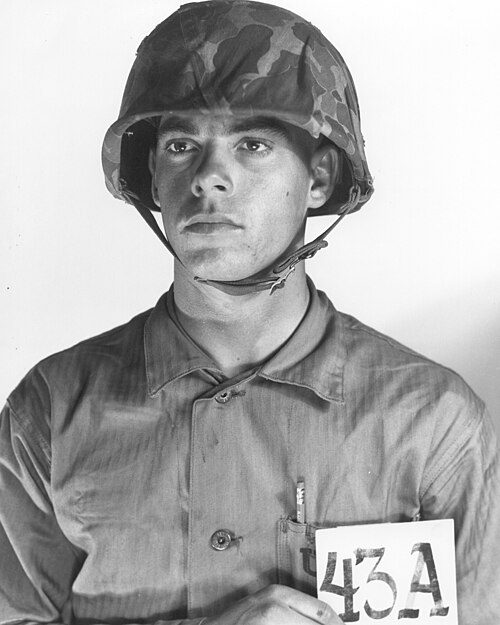
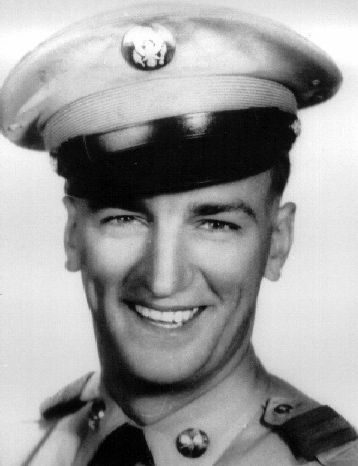
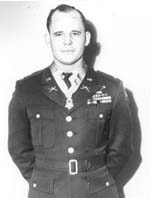
Serving as a Marine in the U.S. Marine Corps, Captain William Earl Barber received the Medal of Honor for his actions between November 28 and December 2, 1950 at Chosin Reservoir, Korea during the Korean War. At the time he was serving with Company F, 2d Battalion, 7th Marines, 1st Marine Division (Rein). Barber was 30 years old.
One other service member also received the Medal of Honor for actions on the same day. The medal was presented on August 20, 1952 — the White House, presented by Pres. Harry S. Truman. He later rose to the rank of Colonel.
Barber was born on November 30, 1919 in Dehart, Morgan County, Kentucky. His Medal of Honor is credited to West Liberty, Morgan Coounty, Kentucky. Barber died on April 19, 2002 in Irvine, California, at the age of 82. He is buried at Arlington National Cemetery in Arlington, Virginia.
Barber is one of 153 Medal of Honor recipients from the Korean War and one of 44 credited to Kentucky.
Official Medal of Honor citation
For conspicuous gallantry and intrepidity at the risk of his life above and beyond the call of duty as commanding officer of Company F, Second Battalion, Seventh Marines, First Marine Division (Reinforced), in action against enemy aggressor forces in Korea from 28 November to 2 December 1950. Assigned to defend a three-mile mountain pass along the division's main supply line and commanding the only route of approach in the march from Yudam-ni to Hagaru-ri, Captain Barber took position with his battle-weary troops, and, before nightfall, had dug in and set up a defense along the frozen, snow-covered hillside. When a force of estimated regimental strength savagely attacked during the night, inflicting heavy casualties and finally surrounding his position following a bitterly fought seven-hour conflict, Captain Barber, after repulsing the enemy, gave assurance that he could hold if supplied by airdrops and requested permission to stand fast when orders were received by radio to fight his way back to a relieving force after two reinforcing units had been driven back under fierce resistance in their attempts to reach the isolated troops. Aware that leaving the position would sever contact with the 8,000 marines trapped at Yudam-ni and jeopardize their chances of joining the 3,000 more awaiting their arrival in Hagaru-ri for the continued drive to the sea, he chose to risk loss of his command rather than sacrifice more men if the enemy seized control and forced a renewed battle to regain the position, or abandon his many wounded who were unable to walk. Although severely wounded in the leg in the early morning of the 29th, Captain Barber continued to maintain personal control, often moving up and down the lines on a stretcher to direct the defense and consistently encouraging and inspiring his men to supreme efforts despite the staggering opposition. Waging desperate battle throughout five days and six nights of repeated onslaughts launched by the fanatical aggressors, he and his heroic command accounted for approximately 1,000 enemy dead in this epic stand in bitter subzero weather, and when the company was relieved, only 82 of his original 220 men were able to walk away from the position so valiantly defended against insuperable odds. His profound faith and courage, great personal valor, and unwavering fortitude were decisive factors in the successful withdrawal of the division from the deathtrap in the Chosin Reservoir sector and reflect the highest credit upon Captain Barber, his intrepid officers and men, and the United States Naval Service.
Citation text: U.S. Government, public domain.
Wounds and injuries
What the citation records about his wounds:
Although severely wounded in the leg in the early morning of the 29th, Captain Barber continued to maintain personal control, often moving up and down the lines on a stretcher to direct the defense and consistently encouraging and inspiring his men to supreme efforts despite the staggering opposition.
- Age at death: 82
- Resting place: Arlington National Cemetery
Other decorations and honors
Besides the Medal of Honor, William Earl Barber received:
Source: Wikidata. Gold chips link to our guide to that decoration.
Battles and campaigns
Also served in: World War II, Vietnam War, Korean War.
Life beyond the battlefield
- Education: Morehead State University
Source: Wikidata.
Places
Veteran resources, cemeteries and meeting places in Kentucky →
Timeline
- November 30, 1919Born in Dehart, Morgan County, Kentucky
- November 28 - December 2, 1950Act of valor — Chosin Reservoir, KoreaAge 30. Company F, 2d Battalion, 7th Marines, 1st Marine Division (Rein)
- August 20, 1952Medal of Honor presentedThe White House, presented by Pres. Harry S. Truman
- April 19, 2002Died in Irvine, CaliforniaAge 82.
- Resting placeArlington National CemeteryArlington, Virginia
Biography
William Earl Barber (November 30, 1919 – April 19, 2002) was a United States Marine Corps colonel. He fought on Iwo Jima during World War II and was awarded the Medal of Honor for his actions in the Battle of Chosin Reservoir during the Korean War. Then Captain Barber and his company of 220 men held off more than 1,400 Chinese soldiers during six days of fighting in North Korea. Despite the extremely cold weather conditions and a bullet wound to the leg, Barber refused evacuation and an order for his company to withdraw from their mountain pass defensive position, which was surrounded.
From the Wikipedia article “William E. Barber”, licensed under CC BY-SA 4.0. Read the full article →
Videos
Videos load from Vimeo only after you press play.