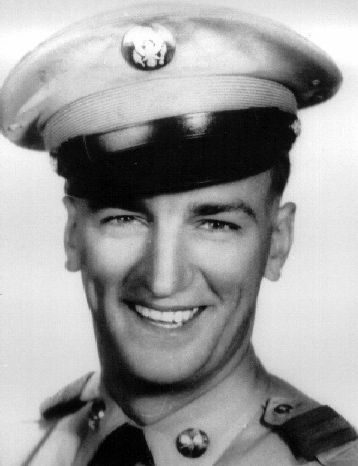
Corporal John Walton Collier, a soldier in the U.S. Army, was awarded the Medal of Honor posthumously for gallantry on September 19, 1950 in Chindoing-ni, Korea during the Korean War. At the time he was serving with Company C, 27th Infantry Regiment, 25th Infantry Division. Collier was 21 years old.
Collier was killed in the action for which his medal was awarded. One other service member also received the Medal of Honor for actions on the same day. The medal was presented on June 21, 1951 — the Pentagon, presented by Gen. Omar N. Bradley to his Father.
Collier was born on April 3, 1929 in Worthington, Greenup County, Kentucky. He is buried at Arlington National Cemetery in Arlington, Virginia. His medal is held by Highlands Museum and Discovery Center, Ashland, KY.
Collier is one of 153 Medal of Honor recipients from the Korean War and one of 44 credited to Kentucky.
Official Medal of Honor citation
Cpl. Collier, Company C, distinguished himself by conspicuous gallantry and intrepidity above and beyond the call of duty in action. While engaged in an assault on a strategic ridge strongly defended by a fanatical enemy, the leading elements of his company encountered intense automatic-weapons and grenade fire. Cpl. Collier and three comrades volunteered and moved forward to neutralize an enemy machine-gun position which was hampering the company's advance, but they were twice repulsed. On the third attempt, Cpl. Collier, despite heavy enemy fire and grenade barrages, moved to an exposed position ahead of his comrades, assaulted and destroyed the machine-gun nest, killing at least four enemy soldiers. As he returned down the rocky, fire-swept hill and joined his squad, an enemy grenade landed in their midst. Shouting a warning to his comrades, he, selflessly and unhesitatingly, threw himself upon the grenade and smothered its explosion with his body. This intrepid action saved his comrades from death or injury. Cpl. Collier's supreme, personal bravery, consummate gallantry, and noble self-sacrifice reflect untold glory upon himself and uphold the honored traditions of the military service.
Citation text: U.S. Government, public domain.
Wounds and death in action
- Killed in action during the act for which the medal was awarded (September 19, 1950).
- Cause of death: gunshot wound
- Age at death: 21
- Resting place: Arlington National Cemetery
Cause and manner of death: Wikidata.
Other decorations and honors
Besides the Medal of Honor, John Walton Collier received:
Source: Wikidata. Gold chips link to our guide to that decoration.
Battles and campaigns
Also served in: Korean War.
Places
Veteran resources, cemeteries and meeting places in Kentucky →
Timeline
- April 3, 1929Born in Worthington, Greenup County, Kentucky
- September 19, 1950Act of valor — Chindoing-ni, KoreaAge 21. Company C, 27th Infantry Regiment, 25th Infantry Division Killed in action.
- June 21, 1951Medal of Honor presented posthumouslyThe Pentagon, presented by Gen. Omar N. Bradley to his Father
- Resting placeArlington National CemeteryArlington, Virginia
Biography
John Walton Collier (April 3, 1929 – September 19, 1950) was a soldier in the United States Army during the Korean War. On June 24, 1951, he posthumously received the Medal of Honor for his actions during the breakout from the Pusan Perimeter.
From the Wikipedia article “John W. Collier”, licensed under CC BY-SA 4.0. Read the full article →
Further reading
- Ernest West, Medal of Honor recipient who saved three in Korea, dies at 89washingtonpost.com · 2021