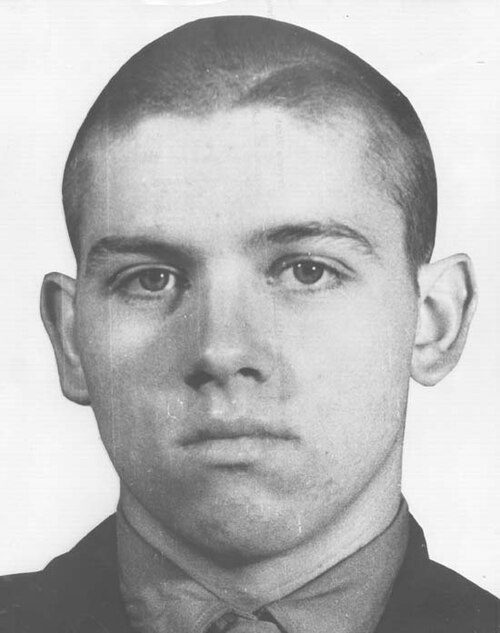
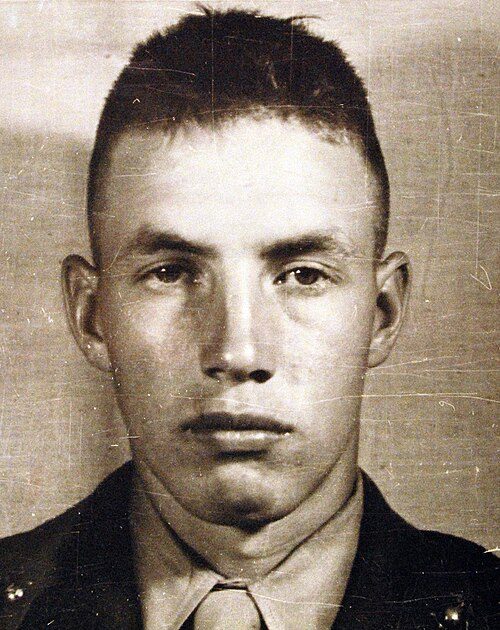
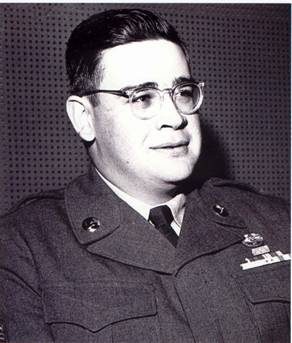
Serving as a Marine in the U.S. Marine Corps, Major Reginald Rodney Myers received the Medal of Honor for his actions on November 29, 1950 near Hagaru-ri, Korea during the Korean War. At the time he was serving with 3d Battalion, 1st Marines, 1st Marine Division (Rein). Myers was 31 years old.
3 other service members also received the Medal of Honor for actions on the same day. The medal was presented on October 29, 1951 — the White House, presented by Pres. Harry S. Truman. He later rose to the rank of Colonel.
Myers was born on November 26, 1919 in Boise, Ada County, Idaho. Myers died on October 23, 2005 in Jupiter, Florida, at the age of 85. He is buried at Arlington National Cemetery in Arlington, Virginia.
Myers is one of 153 Medal of Honor recipients from the Korean War and one of 10 credited to Idaho.
Official Medal of Honor citation
For conspicuous gallantry and intrepidity at the risk of his life above and beyond the call of duty as executive officer of the 3d Battalion, in action against enemy aggressor forces. Assuming command of a composite unit of Army and Marine service and headquarters elements totaling approximately 250 men, during a critical stage in the vital defense of the strategically important military base at Hagaru-ri, Maj. Myers immediately initiated a determined and aggressive counterattack against a well-entrenched and cleverly concealed enemy force numbering an estimated 4,000. Severely handicapped by a lack of trained personnel and experienced leaders in his valiant efforts to regain maximum ground prior to daylight, he persisted in constantly exposing himself to intense, accurate, and sustained hostile fire in order to direct and supervise the employment of his men and to encourage and spur them on in pressing the attack. Inexorably moving forward up the steep, snow-covered slope with his depleted group in the face of apparently insurmountable odds, he concurrently directed artillery and mortar fire with superb skill and although losing 170 of his men during 14 hours of raging combat in subzero temperature, continued to reorganize his unit and spearhead the attack which resulted in 600 enemy killed and 500 wounded. By his exceptional and valorous leadership throughout, Maj. Myers contributed directly to the success of his unit in restoring the perimeter. His resolute spirit of self-sacrifice and unfaltering devotion to duty enhance and sustain the highest traditions of the U.S. Naval Service.
Citation text: U.S. Government, public domain.
Other decorations and honors
Besides the Medal of Honor, Reginald Rodney Myers received:
Source: Wikidata. Gold chips link to our guide to that decoration.
Battles and campaigns
Battle of Okinawa
Result: Allied victory
15 Medal of Honor recipients
1950 · Korean WarBattle of Inchon
Result: United Nations victory; Beginning of the North Korean withdrawal from South Korea; Start of the UN...
7 Medal of Honor recipients
1950 · Korean WarBattle of Changjin Reservoir
8 Medal of Honor recipients
Also served in: World War II, Korean War.
Life beyond the battlefield
- Education: George Washington University
Source: Wikidata.
Places
Timeline
- November 26, 1919Born in Boise, Ada County, Idaho
- November 29, 1950Act of valor — near Hagaru-ri, KoreaAge 31. 3d Battalion, 1st Marines, 1st Marine Division (Rein)
- October 29, 1951Medal of Honor presentedThe White House, presented by Pres. Harry S. Truman
- October 23, 2005Died in Jupiter, FloridaAge 85.
- Resting placeArlington National CemeteryArlington, Virginia
Biography
Colonel Reginald Rodney Myers (November 26, 1919 – October 23, 2005) was a United States Marine Corps officer. He received the Medal of Honor for defeating 4,000 men with a group of 250 United Nations troops in November 1950 during the Battle of Chosin Reservoir in the Korean War.
From the Wikipedia article “Reginald R. Myers”, licensed under CC BY-SA 4.0. Read the full article →
Videos
Videos load from Vimeo only after you press play.