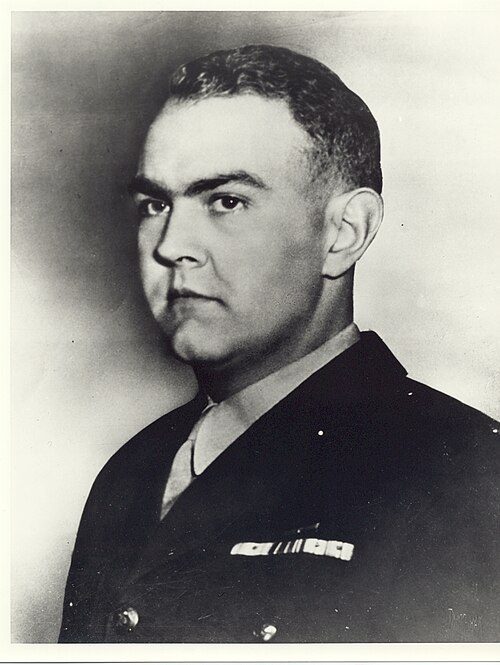
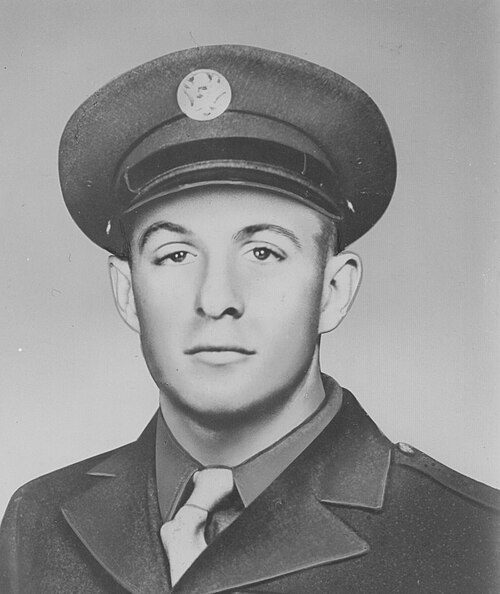
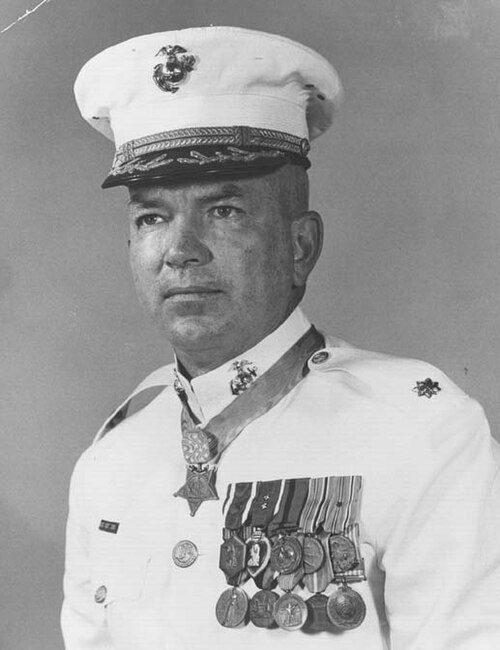
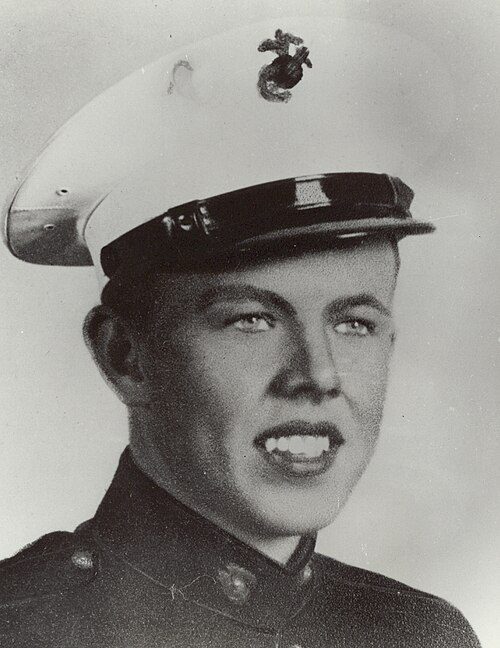
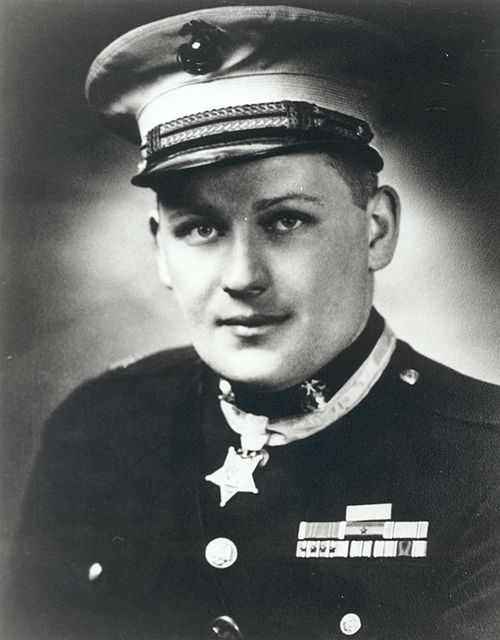
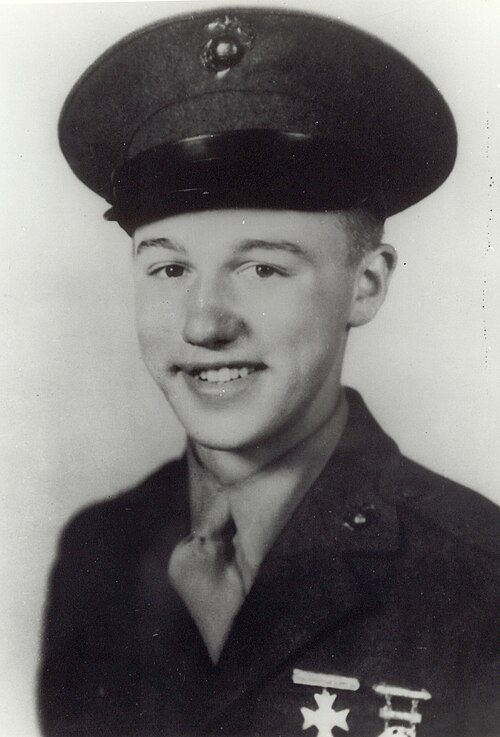
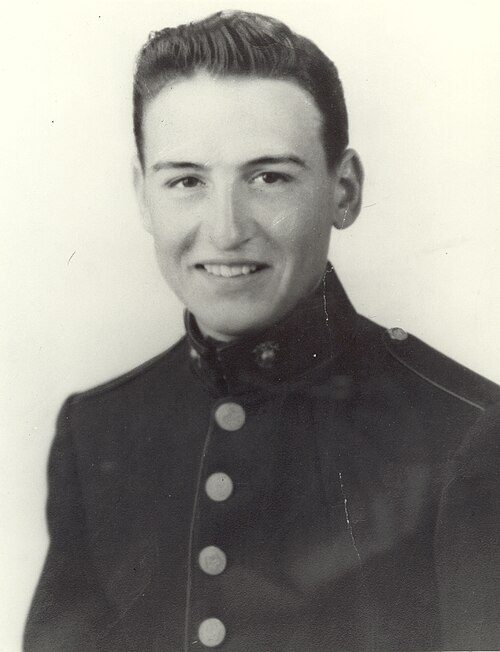
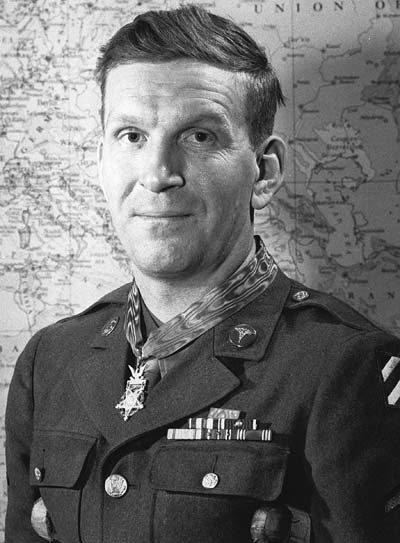
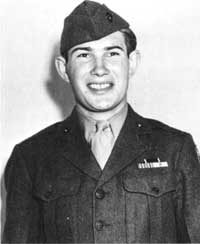
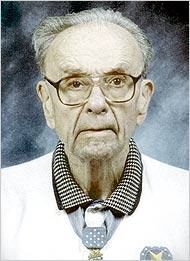
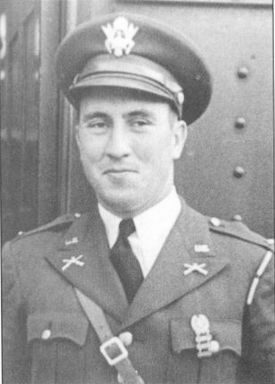
Serving as a Marine in the U.S. Marine Corps Reserve, Corporal Louis James Hauge Jr. was awarded the Medal of Honor posthumously for his actions on May 14, 1945 in Okinawa Shima, Ryukyu Islands during World War II. At the time he was serving with Company C, 1st Battalion, 1st Marines, 1st Marine Division. Hauge was 20 years old.
Hauge was killed in the action for which his medal was awarded. 2 other service members also received the Medal of Honor for actions on the same day. The medal was presented on June 14, 1946 — presented by Col. Norman E. True to his Father.
Hauge was born on December 12, 1924 in Ada, Norman County, Minnesota. His Medal of Honor is credited to Minnesota. He is buried at Ada Cemetery.
Hauge is one of 474 Medal of Honor recipients from World War II and one of 45 credited to Minnesota.
Official Medal of Honor citation
For conspicuous gallantry and intrepidity at risk of his life above and beyond the call of duty as leader of a machine-gun squad serving with Company C, 1st Battalion, 1st Marines, 1st Marine Division, in action against enemy Japanese forces on Okinawa Shima in the Ryukyu Chain on 14 May 1945. Alert and aggressive during a determined assault against a strongly fortified Japanese hill position, Cpl. Hauge boldly took the initiative when his company's left flank was pinned down under a heavy machine-gun and mortar barrage with resultant severe casualties and, quickly locating the two machine guns which were delivering the uninterrupted stream of enfilade fire, ordered his squad to maintain a covering barrage as he rushed across an exposed area toward the furiously blazing enemy weapons. Although painfully wounded as he charged the first machine gun, he launched a vigorous singlehanded grenade attack, destroyed the entire hostile gun position, and moved relentlessly forward toward the other emplacement despite his wounds and the increasingly heavy Japanese fire. Undaunted by the savage opposition, he again hurled his deadly grenades with unerring aim and succeeded in demolishing the second enemy gun before he fell under the slashing fury of Japanese sniper fire. By his ready grasp of the critical situation and his heroic one-man assault tactics, Cpl. Hauge had eliminated two strategically placed enemy weapons, thereby releasing the besieged troops from an overwhelming volume of hostile fire and enabling his company to advance. His indomitable fighting spirit and decisive valor in the face of almost certain death reflect the highest credit upon Cpl. Hauge and the U.S. Naval Service. He gallantly gave his life in the service of his country.
Citation text: U.S. Government, public domain.
Wounds and death in action
What the citation records about his wounds:
Although painfully wounded as he charged the first machine gun, he launched a vigorous singlehanded grenade attack, destroyed the entire hostile gun position, and moved relentlessly forward toward the other emplacement despite his wounds and the increasingly heavy Japanese fire.
- Killed in action during the act for which the medal was awarded (May 14, 1945).
- Age at death: 20
- Resting place: Ada Cemetery
Other decorations and honors
Besides the Medal of Honor, Louis James Hauge Jr. received:
Source: Wikidata. Gold chips link to our guide to that decoration.
Battles and campaigns
Battle of Okinawa
Result: Allied victory
15 Medal of Honor recipients
1944 · World War IIBattle of Peleliu
Result: American victory
6 Medal of Honor recipients
Also served in: World War II.
Places
Veteran resources, cemeteries and meeting places in Minnesota →
Timeline
- December 12, 1924Born in Ada, Norman County, Minnesota
- May 14, 1945Act of valor — Okinawa Shima, Ryukyu IslandsAge 20. Company C, 1st Battalion, 1st Marines, 1st Marine Division Killed in action.
- June 14, 1946Medal of Honor presented posthumouslyPresented by Col. Norman E. True to his Father
- Resting placeAda Cemetery
Biography
Corporal Louis James Hauge Jr. (December 12, 1924 – May 14, 1945) was a United States Marine who posthumously received his nation's highest military honor — the Medal of Honor — for his actions during the Battle of Okinawa in World War II.
From the Wikipedia article “Louis J. Hauge Jr.”, licensed under CC BY-SA 4.0. Read the full article →