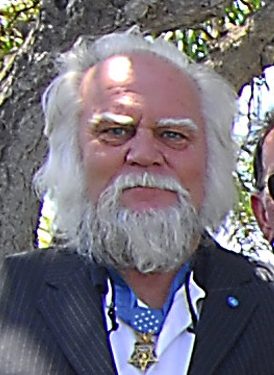
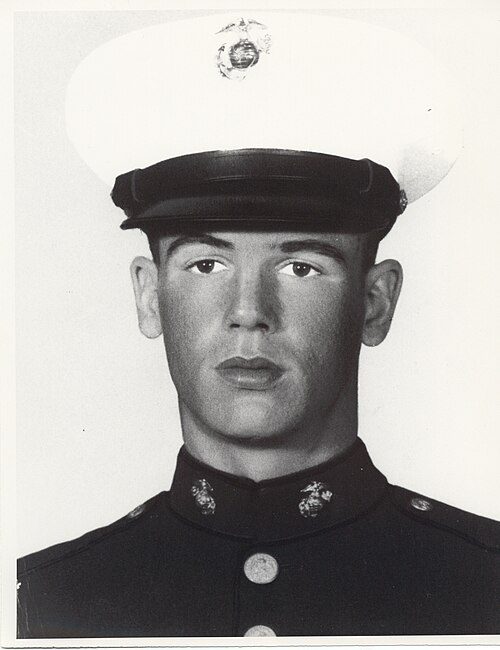
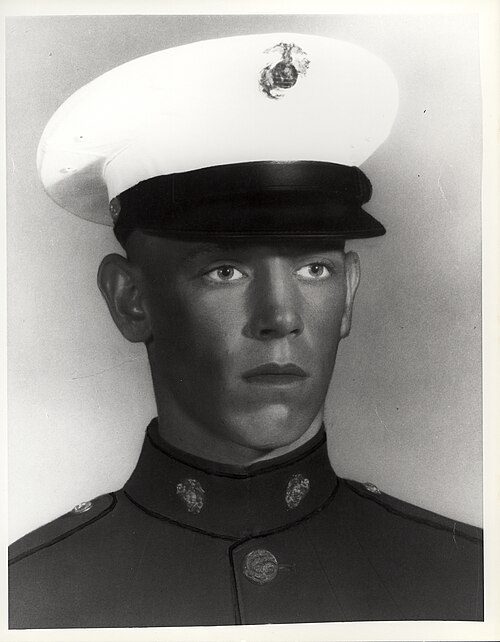
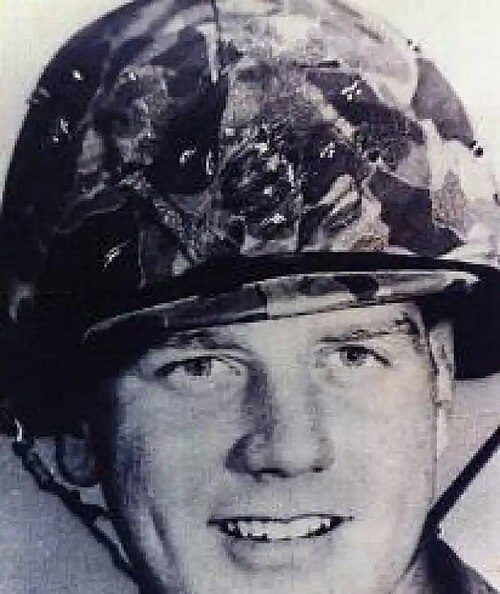
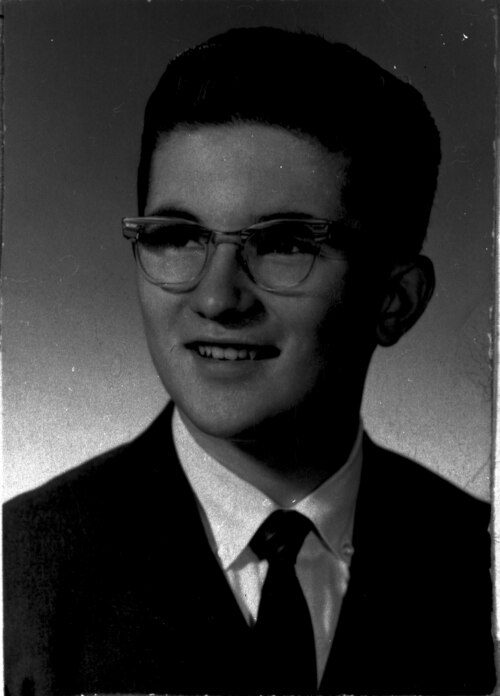
Serving as a soldier in the U.S. Army, Major John J. Duffy received the Medal of Honor for his actions between April 14 and 15, 1972 in Central Highlands, Vietnam during the Vietnam War. At the time he was serving with Military Assistance Command Vietnam (MACV) Team 162, 5th Special Forces. Duffy was 34 years old.
The medal was presented on July 5, 2022, 50 years after the action — presented at the White House by President Joseph R. Biden, Jr.
Duffy was born on March 16, 1938 in New York City, New York, US. His Medal of Honor is credited to Illinois, US. Duffy is one of the living Medal of Honor recipients.
Duffy is one of 274 Medal of Honor recipients from the Vietnam War and one of 210 credited to Illinois.
Official Medal of Honor citation
Major John J. Duffy distinguished himself by acts of gallantry and intrepidity above and beyond the call of duty while serving as the Senior Advisor to the 11th Airborne Battalion, 2d Brigade, Airborne Division, Army of the Republic of Vietnam in the Republic of Vietnam, during the period of 14 to 15 April 1972. In the two days preceding the events of 14 to 15 April 1972, the commander of the 11th Airborne Battalion was killed, the battalion command post was destroyed, and Major Duffy was twice wounded but refused to be evacuated. Then on 14 April, Major Duffy directed the defense of Fire Support Base Charlie, which was surrounded by a battalion-size enemy element. In the morning hours, after a failed effort to establish a landing zone for resupply aircraft, he moved close to enemy anti-aircraft positions to call in airstrikes. At this time, Major Duffy was again wounded by fragments from a recoilless rifle round and again refused medical evacuation. Shortly thereafter, the enemy began an artillery bombardment on the base and he remained in an exposed position to direct gunships onto the enemy positions which eventually silenced the enemy fire. Following the bombardment, Major Duffy assessed the conditions on the base and personally ensured the wounded friendly foreign soldiers were moved to positions of relative safety and the remaining ammunition was appropriately distributed to the remaining defenders. Shortly thereafter, the enemy resumed indirect fire on the base, expending an estimated 300 rounds. Nevertheless, he remained in an exposed position to direct gunship fire on the enemy positions. In the late afternoon hours, the enemy began a ground assault from all sides of the firebase and Major Duffy moved from position to position to adjust fire, spot targets for artillery observers, and ultimately to direct gunship fire on a friendly position which had been compromised. As the evening wore on, it became clear that the defenders could not withstand the overwhelming enemy forces and he began to organize an evacuation of the firebase under the cover of night. With the goal of a complete withdrawal, Major Duffy was the last man off the base, remaining behind to adjust the covering fire from gunships until the last possible moment. When the acting battalion commander was wounded, he assumed command of the evacuation and maintained communication with the available air support to direct fire on the enemy. In the early morning hours of 15 April, the enemy ambushed the Battalion inflicting additional casualties and scattering some of the able-bodied soldiers. Major Duffy organized defensive positions during the ambush and ensured the friendly foreign forces could successfully repulse the enemy. After withstanding the ambush, he led the evacuees, many of whom were significantly wounded, to an established evacuation area, despite being continually pursued by the enemy. Upon reaching the exfiltration site, Major Duffy directed gunship fire on enemy positions and marked a landing zone for the helicopters. Only after ensuring all of the evacuees were aboard, did Major Duffy board while also assisting a wounded friendly foreign soldier in with him. Once on board, he administered aid to a helicopter door gunner who had been wounded during the evacuation. Major Duffy's extraordinary heroism and selflessness above and beyond the call of duty were in keeping with the highest traditions of military service and reflect great credit upon himself, his unit, and the United States Army.
Citation text: U.S. Government, public domain.
Wounds and injuries
What the citation records about his wounds:
In the two days preceding the events of 14 to 15 April 1972, the commander of the 11th Airborne Battalion was killed, the battalion command post was destroyed, and Major Duffy was twice wounded but refused to be evacuated.
At this time, Major Duffy was again wounded by fragments from a recoilless rifle round and again refused medical evacuation.
Other decorations and honors
Besides the Medal of Honor, John J. Duffy received:
Source: Wikidata. Gold chips link to our guide to that decoration.
Battles and campaigns
Also served in: Vietnam War.
Places
- Born: New York City — map
Veteran resources, cemeteries and meeting places in Illinois →
Timeline
- March 16, 1938Born in New York City, New York, US
- April 14 - 15, 1972Act of valor — Central Highlands, VietnamAge 34. Military Assistance Command Vietnam (MACV) Team 162, 5th Special Forces
- July 5, 2022Medal of Honor presentedPresented at the White House by President Joseph R. Biden, Jr.
Biography
John Joseph Duffy (born 16 March 1938) is a retired United States Army major who was awarded the Medal of Honor on 5 July 2022, for his actions during the Vietnam War.
From the Wikipedia article “John J. Duffy”, licensed under CC BY-SA 4.0. Read the full article →