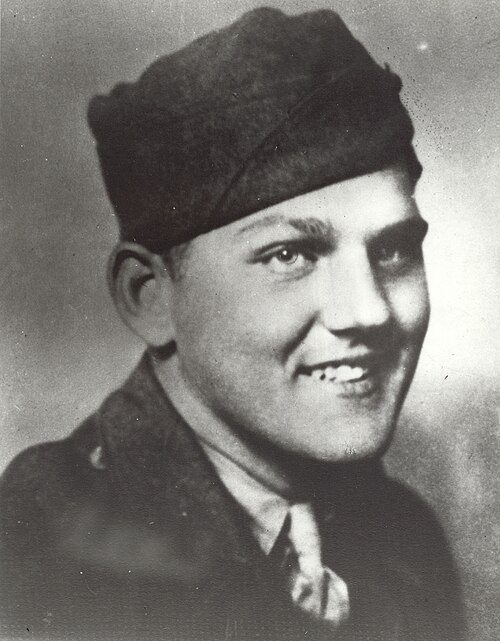
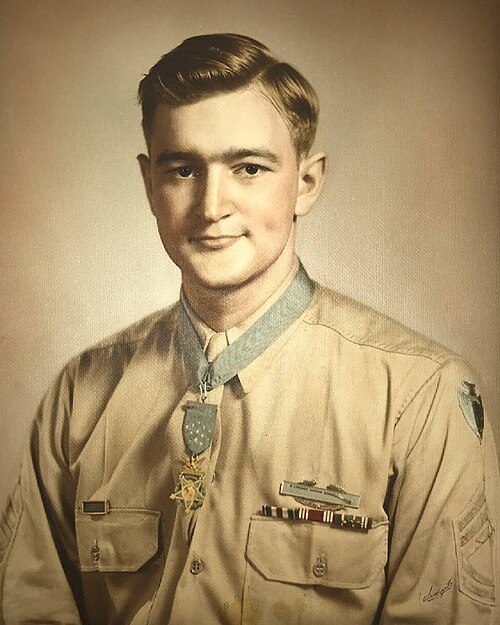
Pharmacist's Mate First Class John Harlan Willis, a sailor in the U.S. Navy, was awarded the Medal of Honor posthumously for gallantry on February 28, 1945 in Iwo Jima, Volcano Islands during World War II. At the time he was serving with 3d Battalion, 27th Marines, 5th Marine Division. Willis was 23 years old.
Willis was killed in the action for which his medal was awarded. The medal was presented on December 12, 1945 — presented to his widow, Mrs. Winfrey Willis Duke, by Secretary of the Navy James Forrestal.
Willis was born on June 10, 1921 in Columbia, Maury County, Tennessee. His Medal of Honor is credited to Tennessee. He is buried at Rose Hill Cemetery in Columbia, Tennessee.
Willis is one of 474 Medal of Honor recipients from World War II and one of 33 credited to Tennessee.
Official Medal of Honor citation
For conspicuous gallantry and intrepidity at the risk of his life above and beyond the call of duty as platoon corpsman serving with the 3d Battalion, 27th Marines, 5th Marine Division, during operations against enemy Japanese forces on Iwo Jima, Volcano Islands, 28 February 1945. Constantly imperiled by artillery and mortar fire from strong and mutually supporting pillboxes and caves studding Hill 362 in the enemy cross-island defenses, Willis resolutely administered first aid to the many marines wounded during the furious close-in fighting until he himself was struck by shrapnel and was ordered back to the battle-aid station. Without waiting for official medical release, he quickly returned to his company and, during a savage hand-to-hand enemy counterattack, daringly advanced to the extreme front lines under mortar and sniper fire to aid a marine lying wounded in a shell hole. Completely unmindful of his own danger as the Japanese intensified their attack, Willis calmly continued to administer blood plasma to his patient, promptly returning the first hostile grenade which landed in the shell hole while he was working and hurling back seven more in quick succession before the ninth one exploded in his hand and instantly killed him. By his great personal valor in saving others at the sacrifice of his own life, he inspired his companions, although terrifically outnumbered, to launch a fiercely determined attack and repulse the enemy force. His exceptional fortitude and courage in the performance of duty reflect the highest credit upon Willis and the U.S. Naval Service. He gallantly gave his life for his country.
Citation text: U.S. Government, public domain.
Wounds and death in action
What the citation records about his wounds:
Constantly imperiled by artillery and mortar fire from strong and mutually supporting pillboxes and caves studding Hill 362 in the enemy cross-island defenses, Willis resolutely administered first aid to the many marines wounded during the furious close-in fighting until he himself was struck by shrapnel and was ordered back to the battle-aid station.
- Killed in action during the act for which the medal was awarded (February 28, 1945).
- Age at death: 23
- Resting place: Rose Hill Cemetery
Battles and campaigns
Also served in: World War II.
Places
Veteran resources, cemeteries and meeting places in Tennessee →
Timeline
- June 10, 1921Born in Columbia, Maury County, Tennessee
- February 28, 1945Act of valor — Iwo Jima, Volcano IslandsAge 23. 3d Battalion, 27th Marines, 5th Marine Division Killed in action.
- December 12, 1945Medal of Honor presented posthumouslyPresented to his widow, Mrs. Winfrey Willis Duke, by Secretary of the Navy James Forrestal.
- Resting placeRose Hill CemeteryColumbia, Tennessee
Biography
John Harlan Willis (June 10, 1921 – February 28, 1945) was a United States Navy hospital corpsman who was killed in action during World War II while serving with a Marine Corps rifle company. He was posthumously awarded the nation's highest military decoration for valor, the Medal of Honor, for heroic actions "above and beyond the call of duty" on February 28, 1945, during the Battle of Iwo Jima.
From the Wikipedia article “John Harlan Willis”, licensed under CC BY-SA 4.0. Read the full article →