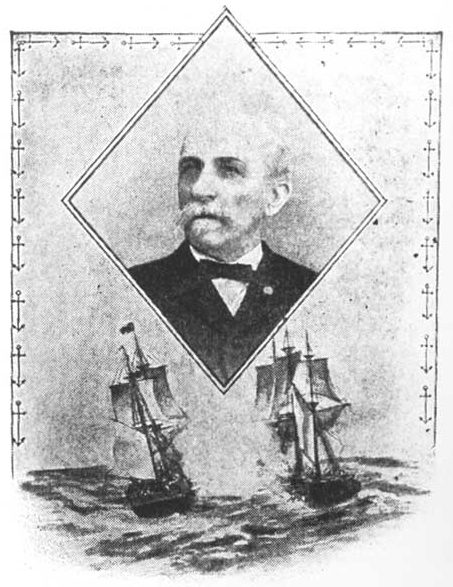
Seaman Hendrick Sharp, a sailor in the U.S. Navy, received the Medal of Honor for gallantry on August 5, 1864 at Fort Mogan, Mobile Bay, Alabama during the Civil War. At the time he was serving with U.S.S. Richmond. Sharp was about 49 years old.
97 other service members also received the Medal of Honor for actions on the same day.
Sharp was born in 1815 in Malaga, Spain — one of 2 recipients born in Spain. His Medal of Honor is credited to New York, New York. Sharp died in July 1892, at the age of about 77. He is buried at Ted Conaway National Cemetery in Portsmouth, Virginia.
Sharp is one of 1,525 Medal of Honor recipients from the Civil War and one of 678 credited to New York.
Official Medal of Honor citation
As captain of a 100-pounder rifle gun on topgallant forecastle on board the U.S.S. Richmond during action against rebel forts and gunboats and against the ram Tennessee in Mobile Bay, 5 August 1864. Despite damage to his ship and the loss of several men on board as enemy fire raked her decks, Sharp fought his gun with skill and courage throughout a furious two-hour battle which resulted in the surrender of the rebel ram Tennessee and in the damaging and destruction of batteries at Fort Morgan.
Citation text: U.S. Government, public domain.
Battles and campaigns
Also served in: American Civil War.
Places
- Born: Spain — map
- Died: Norfolk Naval Shipyard — map
- Buried: Captain Ted Conaway Memorial Naval Cemetery — map
Veteran resources, cemeteries and meeting places in New York →
Timeline
- 1815Born in Malaga, Spain
- August 5, 1864Act of valor — Fort Mogan, Mobile Bay, AlabamaAge about 49. U.S.S. Richmond
- July 1892DiedAge about 77.
- Resting placeTed Conaway National CemeteryPortsmouth, Virginia
Biography
Hendrick Sharp (c. 1815 – July 1892) was a Union Navy sailor in the American Civil War and a recipient of the U.S. military's highest decoration, the Medal of Honor, for his actions at the Battle of Mobile Bay.
From the Wikipedia article “Hendrick Sharp”, licensed under CC BY-SA 4.0. Read the full article →