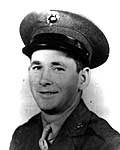
Private George Watson was a soldier in the U.S. Army who was awarded the Medal of Honor posthumously for his actions on March 8, 1943 near Porlock Harbor, New Guinea during World War II. At the time he was serving with 2d Battalion, 29th Quartermaster Regiment. Watson was 28 years old.
Watson was killed in the action for which his medal was awarded. The medal was presented on January 13, 1997, 53 years after the action.
Watson was born on March 24, 1914 in Birmingham, Jefferson County, Alabama. He was buried at sea. His medal is held by U.S. Army Quartermaster Museum, Fort Lee, VA.
Watson is one of 474 Medal of Honor recipients from World War II and one of 21 credited to Alabama.
Official Medal of Honor citation
For conspicuous gallantry and intrepidity at the risk of his life above and beyond the call of duty: Private George Watson distinguished himself by extraordinary heroism on 8 March 1943, while serving in the Pacific Command with the 2d Battalion, 29th Quartermaster Regiment, near Porlock Harbor, New Guinea. Private Watson was onboard a troop ship, the Dutch Steamer (United States Army Transport) Jacob, when it was attacked and hit by enemy bombers. Before it sank, the ship was abandoned. Private Watson, instead of seeking to save himself, remained in deep waters long enough to assist several soldiers who could not swim to reach the safety of a life raft. This heroic action, which subsequently cost him his life, resulted in saving the lives of several of his comrades. Weakened by continuous physical exertion and overcome by muscular fatigue, Private Watson drowned when the suction of the sinking ship dragged him beneath the surface of the swirling waters. His demonstrated bravery and unselfish act set in motion a train of conpelling events that finally led to American victory in the Pacific. Private Watson's extraordinary valorous actions, his daring and inspiring leadership, and his self-sacrificing devotion to his fellow man exemplify the finest traditions of military service.
Citation text: U.S. Government, public domain.
Wounds and death in action
- Killed in action during the act for which the medal was awarded (March 8, 1943).
- Age at death: 28
- Resting place: Buried at Sea
Other decorations and honors
Besides the Medal of Honor, George Watson received:
Source: Wikidata. Gold chips link to our guide to that decoration.
Battles and campaigns
Also served in: World War II.
Life beyond the battlefield
- Education: Colorado State University
Source: Wikidata.
Places
Veteran resources, cemeteries and meeting places in Alabama →
Timeline
- March 24, 1914Born in Birmingham, Jefferson County, Alabama
- March 8, 1943Act of valor — Near Porlock Harbor, New GuineaAge 28. 2d Battalion, 29th Quartermaster Regiment Killed in action.
- January 13, 1997Medal of Honor presented posthumously
- Resting placeBuried at sea
Biography
George Watson (March 14, 1914 – March 8, 1943) was a United States Army private who died while rescuing fellow soldiers from drowning at sea during World War II. In 1997, he was awarded the Medal of Honor, the nation's highest military decoration for valor, for his actions on March 8, 1943, near Porlock Harbor, New Guinea. Watson and six other Black Americans who served in World War II were awarded the Medal of Honor[1] on January 12, 1997. The Medal of Honor was posthumously presented to Watson by President Bill Clinton on January 13, 1997, at a White House ceremony for the seven recipients, the first and only Black Americans to be awarded the Medal of Honor for World War II.
From the Wikipedia article “George Watson (Medal of Honor)”, licensed under CC BY-SA 4.0. Read the full article →
Further reading
- Honoring KIA & POW Medal of Honor Recipientscmohs.org · 2021