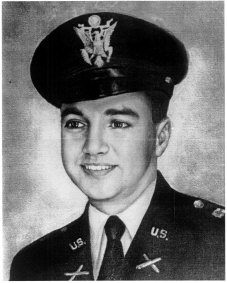
Serving as a soldier in the U.S. Army, Sergeant George Dalton Libby was awarded the Medal of Honor posthumously for his actions on July 20, 1950 near Taejon, Korea during the Korean War. At the time he was serving with Company C, 3d Combat Engineer Battalion, 24th Infantry Division. Libby was 30 years old.
Libby was killed in the action for which his medal was awarded. One other service member also received the Medal of Honor for actions on the same day. The medal was presented on June 21, 1951.
Libby was born on December 4, 1919 in Bridgton, Cumberland County, Maine. His Medal of Honor is credited to Waterbury, New Haven County, Connecticut. He is buried at Arlington National Cemetery in Arlington, Virginia.
Libby is one of 153 Medal of Honor recipients from the Korean War and one of 57 credited to Connecticut.
Official Medal of Honor citation
Sgt. Libby distinguished himself by conspicuous gallantry and intrepidity above and beyond the call of duty in action. While breaking through an enemy encirclement, the vehicle in which he was riding approached an enemy roadblock and encountered devastating fire which disabled the truck, killing or wounding all the passengers except Sgt. Libby. Taking cover in a ditch, Sgt. Libby engaged the enemy and despite the heavy fire crossed the road twice to administer aid to his wounded comrades. He then hailed a passing M-5 artillery tractor and helped the wounded aboard. The enemy directed intense small-arms fire at the driver, and Sgt. Libby, realizing that no one else could operate the vehicle, placed himself between the driver and the enemy thereby shielding him while he returned the fire. During this action he received several wounds in the arms and body. Continuing through the town, the tractor made frequent stops and Sgt. Libby helped more wounded aboard. Refusing first aid, he continued to shield the driver and return the fire of the enemy when another roadblock was encountered. Sgt. Libby received additional wounds but held his position until he lost consciousness. Sgt. Libby's sustained, heroic actions enabled his comrades to reach friendly lines. His dauntless courage and gallant self-sacrifice reflect the highest credit upon himself and uphold the esteemed traditions of the U.S. Army.
Citation text: U.S. Government, public domain.
Wounds and death in action
What the citation records about his wounds:
During this action he received several wounds in the arms and body.
Sgt. Libby received additional wounds but held his position until he lost consciousness.
- Killed in action during the act for which the medal was awarded (July 20, 1950).
- Age at death: 30
- Resting place: Arlington National Cemetery
Other decorations and honors
Besides the Medal of Honor, George Dalton Libby received:
Source: Wikidata. Gold chips link to our guide to that decoration.
Battles and campaigns
Also served in: Korean War.
Places
Veteran resources, cemeteries and meeting places in Connecticut →
Timeline
- December 4, 1919Born in Bridgton, Cumberland County, Maine
- July 20, 1950Act of valor — near Taejon, KoreaAge 30. Company C, 3d Combat Engineer Battalion, 24th Infantry Division Killed in action.
- June 21, 1951Medal of Honor presented posthumously
- Resting placeArlington National CemeteryArlington, Virginia
Biography
George Dalton Libby (4 December 1919 – 20 July 1950) was a soldier in the United States Army who was posthumously awarded the Medal of Honor for his actions on July 20, 1950 during the Korean War. Serving with the 24th Infantry Division, Sergeant Libby was attempting to withdraw from Taejon after the Battle of Taejon when the truck he was riding in was disabled by North Korean fire. Libby exposed himself to enemy fire multiple times to help wounded soldiers, before using himself as a human shield to protect the driver of another truck as they broke through the North Korean forces.
From the Wikipedia article “George D. Libby”, licensed under CC BY-SA 4.0. Read the full article →