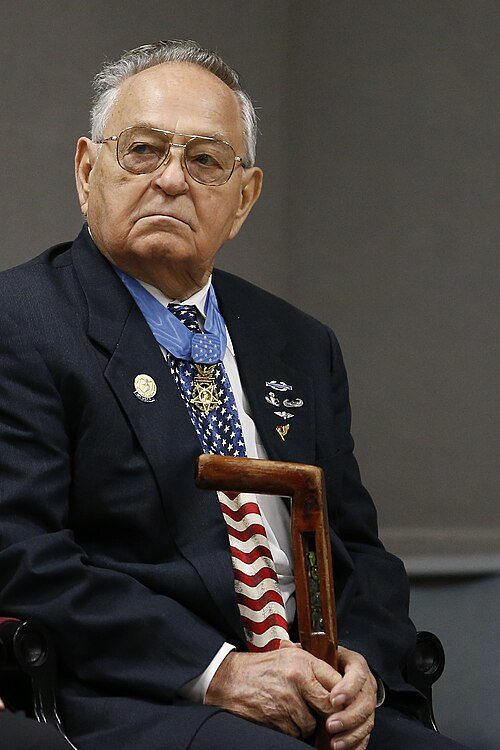
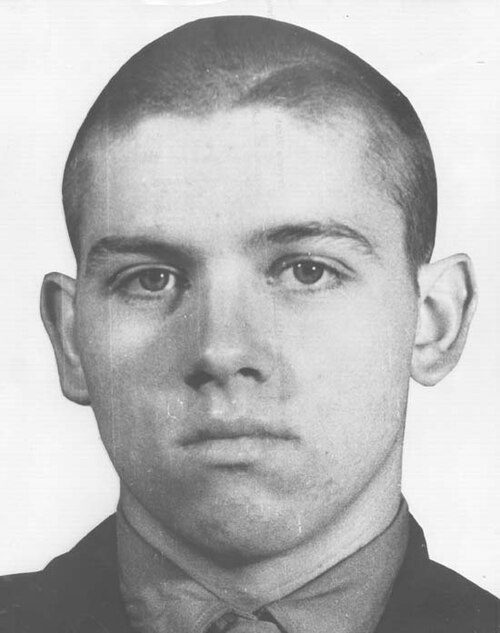
Corporal Fred B. McGee, a soldier in the U.S. Army, was awarded the Medal of Honor posthumously for gallantry on June 16, 1952 at Hill 528, Tang-Wan-Ni, Korea during the Korean War. At the time he was serving with Company K, 3d Battalion, 17th Infantry Regiment, 7th Infantry Division. McGee was 22 years old.
The medal was presented on January 3, 2025, 72 years after the action — at the White House, Washington, D.C., by President Joseph R. Biden, Jr.
McGee was born on May 30, 1930 in Steubenville, Jefferson County, Ohio. His Medal of Honor is credited to Bloomingdale, Jefferson County, Ohio. McGee died on January 3, 2020 in Pittsburgh, Pennsylvania, at the age of 89. He is buried at Northern Cemetery in Smithfield, Ohio.
McGee is one of 153 Medal of Honor recipients from the Korean War and one of 256 credited to Ohio.
Official Medal of Honor citation
Corporal Fred B. McGee distinguished himself by gallantry in action near Tang-Wan-Ni, Korea, on June 16, 1952, in an assault on enemy fortified positions. As gunner on a light machine gun in a weapons squad, Corporal McGee delivered a heavy volume of supporting fire from an exposed position despite intense enemy machine-gun and mortar fire directly on his location. Though forced to move his gun several times, he continued to support the assault and give covering fire to the assault elements of his platoon. When his squad leader was wounded, together with several other members of his squad, he assumed command and moved the squad even farther forward to a more exposed position in order to deliver neutralizing fire on an enemy machine gun sweeping the other assault platoon with deadly flanking fire. When his machine gunner was mortally wounded, he again took over the gun. On order, he directed his squad to withdraw and voluntarily remained behind to help evacuate the wounded and dead. Though wounded in the face, he heroically exposed himself by standing straight up in intense enemy machine-gun and mortar fire while attempting to evacuate the body of the company runner. Forced to abandon the body, he aided a wounded man to be moved to the rear and safely through a huge volume of enemy mortar and artillery fire. The gallantry displayed by Corporal McGee reflects great credit upon himself and is in keeping with the highest traditions of the military service.
Citation text: U.S. Government, public domain.
Wounds and injuries
What the citation records about his wounds:
Though wounded in the face, he heroically exposed himself by standing straight up in intense enemy machine-gun and mortar fire while attempting to evacuate the body of the company runner.
Forced to abandon the body, he aided a wounded man to be moved to the rear and safely through a huge volume of enemy mortar and artillery fire.
- Awarded posthumously — died January 3, 2020.
- Age at death: 89
- Resting place: Northern Cemetery
Timeline
- May 30, 1930Born in Steubenville, Jefferson County, Ohio
- June 16, 1952Act of valor — Hill 528, Tang-Wan-Ni, KoreaAge 22. Company K, 3d Battalion, 17th Infantry Regiment, 7th Infantry Division
- January 3, 2020Died in Pittsburgh, PennsylvaniaAge 89.
- January 3, 2025Medal of Honor presented posthumouslyAt the White House, Washington, D.C., by President Joseph R. Biden, Jr.
- Resting placeNorthern CemeterySmithfield, Ohio
Biography
Fred B. McGee (30 May 1930 – 3 January 2020) was a United States Army soldier of African American descent who was posthumously awarded the Medal of Honor on 3 January 2025 for his actions on 16 June 1952 during the Korean War.
From the Wikipedia article “Fred B. McGee”, licensed under CC BY-SA 4.0. Read the full article →