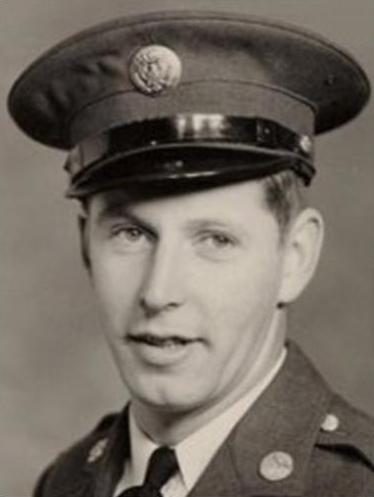
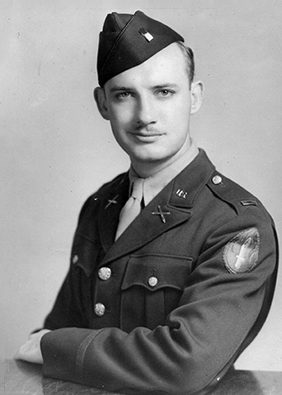
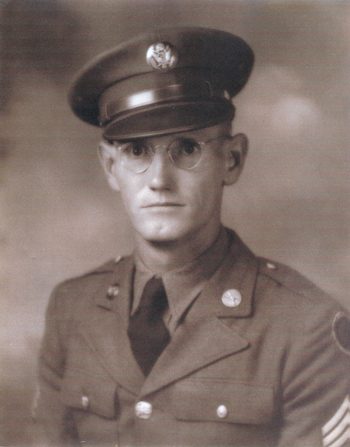
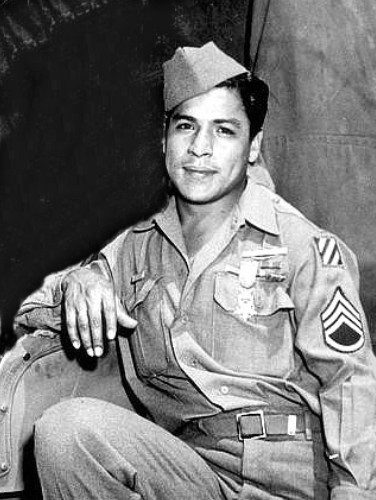
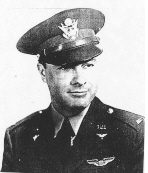
Serving as a soldier in the U.S. Army, First Lieutenant Eli Lamar Whiteley received the Medal of Honor for his actions on December 27, 1944 in Sigolsheim, France during World War II. At the time he was serving with Company L, 15th Infantry, 3d Infantry Division. Whiteley was 31 years old.
The medal was presented on August 23, 1945 — the White House, presented by Pres. Harry S. Truman.
Whiteley was born on December 10, 1913 in Florence, Williamson County, Texas. His Medal of Honor is credited to Georgetown, Williamson County, Texas. Whiteley died on December 2, 1986 in College Station, Texas, at the age of 72. He is buried at City Cemetery in College Station, Texas. His medal is held by Sam Houston Sanders Corps of Cadets Center, Texas A&M University, College Station, TX ; Memorial Student Center, Texas A&M University (duplicate Medal), College Station, TX.
Whiteley is one of 474 Medal of Honor recipients from World War II and one of 78 credited to Texas.
Official Medal of Honor citation
While leading his platoon on 27 December 1944, in savage house-to-house fighting through the fortress town of Sigolsheim, France, he attacked a building through a street swept by withering mortar and automatic-weapon fire. He was hit and severely wounded in the arm and shoulder; but he charged into the house alone and killed its two defenders. Hurling smoke and fragmentation grenades before him, he reached the next house and stormed inside, killing two and capturing 11 of the enemy. He continued leading his platoon in the extremely dangerous task of clearing hostile troops from strongpoints along the street until he reached a building held by fanatical Nazi troops. Although suffering from wounds which had rendered his left arm useless, he advanced on this strongly defended house and, after blasting out a wall with bazooka fire, charged through a hail of bullets. Wedging his submachine gun under his uninjured arm, he rushed into the house through the hole torn by his rockets, killed five of the enemy, and forced the remaining 12 to surrender. As he emerged to continue his fearless attack, he was again hit and critically wounded. In agony and with one eye pierced by a shell fragment, he shouted for his men to follow him to the next house. He was determined to stay in the fighting and remained at the head of his platoon until forcibly evacuated. By his disregard for personal safety, his aggressiveness while suffering from severe wounds, his determined leadership and superb courage, 1st Lt. Whiteley killed nine Germans, captured 23 more, and spearheaded an attack which cracked the core of enemy resistance in a vital area.
Citation text: U.S. Government, public domain.
Wounds and injuries
What the citation records about his wounds:
He was hit and severely wounded in the arm and shoulder; but he charged into the house alone and killed its two defenders.
Although suffering from wounds which had rendered his left arm useless, he advanced on this strongly defended house and, after blasting out a wall with bazooka fire, charged through a hail of bullets.
As he emerged to continue his fearless attack, he was again hit and critically wounded.
- Age at death: 72
- Resting place: City Cemetery
Battles and campaigns
Also served in: World War II.
Life beyond the battlefield
- Education: North Carolina State University, Texas A&M University
Source: Wikidata.
Places
Timeline
- December 10, 1913Born in Florence, Williamson County, Texas
- December 27, 1944Act of valor — Sigolsheim, FranceAge 31. Company L, 15th Infantry, 3d Infantry Division
- August 23, 1945Medal of Honor presentedThe White House, presented by Pres. Harry S. Truman
- December 2, 1986Died in College Station, TexasAge 72.
- Resting placeCity CemeteryCollege Station, Texas
Biography
Eli Lamar Whiteley (December 10, 1913 – December 2, 1986) was a former infantry captain in the United States Army who received the Medal of Honor for valor in World War II, for his actions in Sigolsheim, France in 1944. He was drafted into the US Army in April 1942, and was discharged in May 1946.
From the Wikipedia article “Eli L. Whiteley”, licensed under CC BY-SA 4.0. Read the full article →