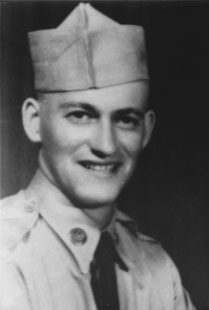
Second Lieutenant Darwin K. Kyle, a soldier in the U.S. Army, was awarded the Medal of Honor posthumously for gallantry on February 16, 1951 near Kamil-ni, Korea during the Korean War. At the time he was serving with Company K, 7th Infantry Regiment, 3d Infantry Division. Kyle was 32 years old.
Kyle was killed in the action for which his medal was awarded. The medal was presented on January 16, 1952.
Kyle was born on June 1, 1918 in Jenkins, Letcher County, Kentucky. His Medal of Honor is credited to Racine, Boone County, West Virginia. He is buried at Sunset Memorial Park in South Charleston, West Virginia.
Kyle is one of 153 Medal of Honor recipients from the Korean War and one of 45 credited to West Virginia.
Official Medal of Honor citation
2d Lt. Kyle, distinguished himself by conspicuous gallantry and intrepidity above and beyond the call of duty in action against the enemy. When his platoon had been pinned down by intense fire, he completely exposed himself to move among and encourage his men to continue the advance against enemy forces strongly entrenched on Hill 185. Inspired by his courageous leadership, the platoon resumed the advance but was again pinned down when an enemy machine gun opened fire, wounding six of the men. 2d Lt. Kyle immediately charged the hostile emplacement alone, engaged the crew in hand-to-hand combat, killing all three. Continuing on toward the objective, his platoon suddenly received an intense automatic-weapons fire from a well-concealed hostile position on its right flank. Again leading his men in a daring bayonet charge against this position, firing his carbine and throwing grenades, 2d Lt. Kyle personally destroyed four of the enemy before he was killed by a burst from an enemy submachine gun. The extraordinary heroism and outstanding leadership of 2d Lt. Kyle, and his gallant self-sacrifice, reflect the highest credit upon himself and are in keeping with the esteemed traditions of the military service.
Citation text: U.S. Government, public domain.
Wounds and death in action
- Killed in action during the act for which the medal was awarded (February 16, 1951).
- Age at death: 32
- Resting place: Sunset Memorial Park
Other decorations and honors
Besides the Medal of Honor, Darwin K. Kyle received:
Source: Wikidata. Gold chips link to our guide to that decoration.
Battles and campaigns
Also served in: World War II, Korean War.
Places
Veteran resources, cemeteries and meeting places in West Virginia →
Timeline
- June 1, 1918Born in Jenkins, Letcher County, Kentucky
- February 16, 1951Act of valor — near Kamil-ni, KoreaAge 32. Company K, 7th Infantry Regiment, 3d Infantry Division Killed in action.
- January 16, 1952Medal of Honor presented posthumously
- Resting placeSunset Memorial ParkSouth Charleston, West Virginia
Biography
Darwin Keith Kyle (June 1, 1918 – February 16, 1951) was an officer in the United States Army who was posthumously awarded the Medal of Honor in the Korean War. A veteran soldier, Kyle earned both a Silver Star and Bronze Star Medal for his heroic actions in France and Germany during World War II. A master sergeant at the outbreak of the Korean War, "Gus" Kyle was awarded the Soldier's Medal for his heroic actions on December 24, 1950, during the final stages of the Hungnam evacuation. He received a battlefield commission as a second lieutenant on January 27, 1951.
From the Wikipedia article “Darwin K. Kyle”, licensed under CC BY-SA 4.0. Read the full article →
Further reading
- Housing towers honoring Medal of Honor recipients open at Camp Humphreysstripes.com · 2024