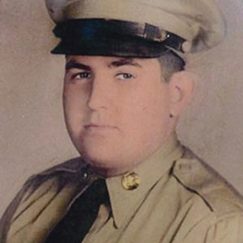
Sergeant Cornelius H. Charlton was a soldier in the U.S. Army who was awarded the Medal of Honor posthumously for his actions on June 2, 1951 in Chipo-ri, Korea during the Korean War. At the time he was serving with Company C, 24th Infantry Regiment, 25th Infantry Division. Charlton was 21 years old.
Charlton was killed in the action for which his medal was awarded. The medal was presented on March 12, 1952 — the Pentagon, presented by Sec. of the Army Frank C. Pace to his parents.
Charlton was born on July 24, 1929 in East Gulf, Raleigh County, West Virginia. His Medal of Honor is credited to Bronx County, New York. He is buried at Arlington National Cemetery in Arlington, Virginia. His medal is held by National Museum of African American History and Culture, Smithsonian Institution, Washington, DC.
Charlton is one of 153 Medal of Honor recipients from the Korean War and one of 678 credited to New York.
Official Medal of Honor citation
Sgt. Charlton, a member of Company C, distinguished himself by conspicuous gallantry and intrepidity above and beyond the call of duty in action against the enemy. His platoon was attacking heavily defended hostile positions on commanding ground when the leader was wounded and evacuated. Sgt. Charlton assumed command, rallied the men, and spearheaded the assault against the hill. Personally eliminating two hostile positions and killing six of the enemy with his rifle fire and grenades, he continued up the slope until the unit suffered heavy casualties and became pinned down. Regrouping the men, he led them forward only to be again hurled back by a shower of grenades. Despite a severe chest wound, Sgt. Charlton refused medical attention and led a third daring charge which carried to the crest of the ridge. Observing that the remaining emplacement which had retarded the advance was situated on the reverse slope, he charged it alone, was again hit by a grenade but raked the position with a devastating fire which eliminated it and routed the defenders. The wounds received during his daring exploits resulted in his death, but his indomitable courage, superb leadership, and gallant self-sacrifice reflect the highest credit upon himself, the infantry, and the military service.
Citation text: U.S. Government, public domain.
Wounds and death in action
What the citation records about his wounds:
Despite a severe chest wound, Sgt. Charlton refused medical attention and led a third daring charge which carried to the crest of the ridge.
- Killed in action during the act for which the medal was awarded (June 2, 1951).
- Age at death: 21
- Resting place: Arlington National Cemetery
Other decorations and honors
Besides the Medal of Honor, Cornelius H. Charlton received:
Source: Wikidata. Gold chips link to our guide to that decoration.
Battles and campaigns
Also served in: Korean War.
Life beyond the battlefield
- Education: James Monroe High School
Source: Wikidata.
Places
Veteran resources, cemeteries and meeting places in New York →
Timeline
- July 24, 1929Born in East Gulf, Raleigh County, West Virginia
- June 2, 1951Act of valor — Chipo-ri, KoreaAge 21. Company C, 24th Infantry Regiment, 25th Infantry Division Killed in action.
- March 12, 1952Medal of Honor presented posthumouslyThe Pentagon, presented by Sec. of the Army Frank C. Pace to his parents
- Resting placeArlington National CemeteryArlington, Virginia
Biography
Cornelius H. Charlton (July 24, 1929 – June 2, 1951) was a soldier in the United States Army during the Korean War, who was posthumously awarded the Medal of Honor for his actions near Chipo-ri, South Korea on June 2, 1951. Born to a coal mining family in West Virginia, Charlton enlisted in the army out of high school in 1946. He was transferred in 1951 to the segregated 24th Infantry Regiment, 25th Infantry Division, fighting in the Korean War. During a battle for Hill 543 near the village of Chipo-ri, Charlton took command of his platoon after its commanding officer was injured, leading it on three successive assaults of the hill.
From the Wikipedia article “Cornelius H. Charlton”, licensed under CC BY-SA 4.0. Read the full article →