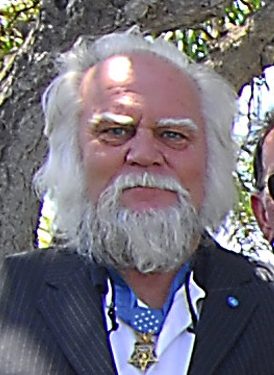
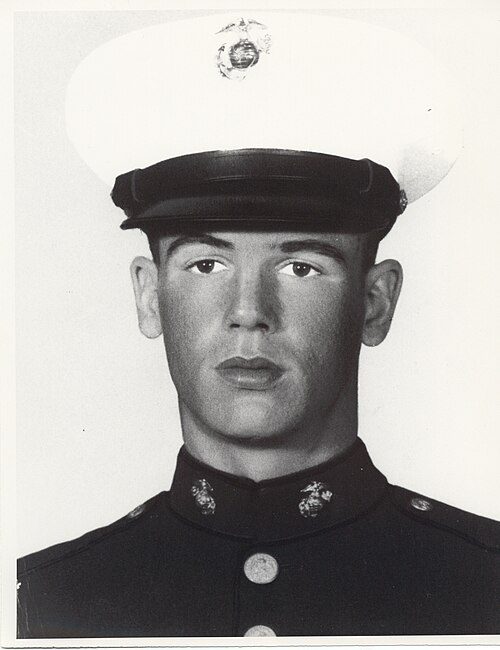
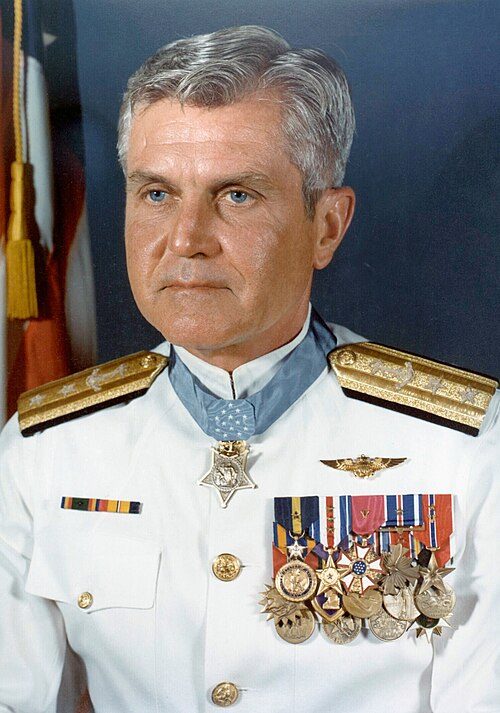
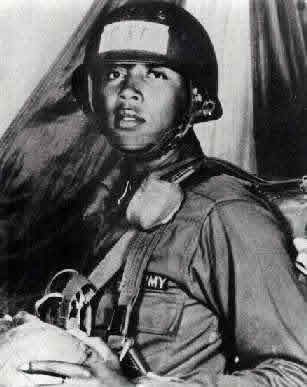
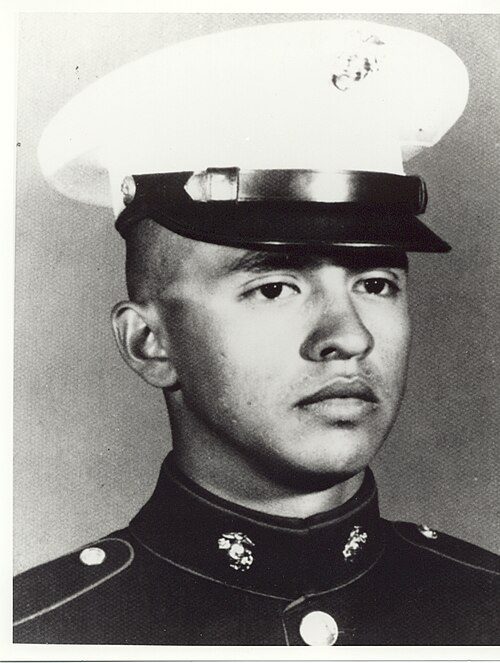
Specialist Fourth Class Allen James Lynch, a soldier in the U.S. Army, received the Medal of Honor for gallantry on December 15, 1967 near My An (2), Binh Dinh Province, Vietnam during the Vietnam War. At the time he was serving with Company D, 1st Battalion (Airmobile), 12th Cavalry, 1st Cavalry Division. Lynch was 22 years old.
The medal was presented on May 14, 1970, 2 years after the action — the White House, presented by Pres. Richard M. Nixon. He later rose to the rank of Sergeant.
Lynch was born on October 28, 1945 in Chicago, Cook County, Illinois. Lynch is one of the living Medal of Honor recipients.
Lynch is one of 274 Medal of Honor recipients from the Vietnam War and one of 210 credited to Illinois.
Official Medal of Honor citation
For conspicuous gallantry and intrepidity in action at the risk of his life above and beyond the call of duty. Sgt. Lynch (then Sp4c.) distinguished himself while serving as a radio telephone operator with Company D. While serving in the forward element on an operation near the village of My An, his unit became heavily engaged with a numerically superior enemy force. Quickly and accurately assessing the situation, Sgt. Lynch provided his commander with information which subsequently proved essential to the unit's successful actions. Observing three wounded comrades lying exposed to enemy fire, Sgt. Lynch dashed across 50 meters of open ground through a withering hail of enemy fire to administer aid. Reconnoitering a nearby trench for a covered position to protect the wounded from intense hostile fire, he killed two enemy soldiers at point-blank range. With the trench cleared, he unhesitatingly returned to the fire-swept area three times to carry the wounded men to safety. When his company was forced to withdraw by the superior firepower of the enemy, Sgt. Lynch remained to aid his comrades at the risk of his life rather than abandon them. Alone, he defended his isolated position for two hours against the advancing enemy. Using only his rifle and a grenade, he stopped them just short of his trench, killing five. Again, disregarding his safety in the face of withering hostile fire, he crossed 70 meters of exposed terrain five times to carry his wounded comrades to a more secure area. Once he had assured their comfort and safety, Sgt. Lynch located the counterattacking friendly company to assist in directing the attack and evacuating the three casualties. His gallantry at the risk of his life is in the highest traditions of the military service. Sgt. Lynch has reflected great credit on himself, the 12th Cavalry, and the U.S. Army.
Citation text: U.S. Government, public domain.
Battles and campaigns
Also served in: Vietnam War.
Life beyond the battlefield
- Education: Riverside High School
Source: Wikidata.
Places
- Born: Chicago — map
Veteran resources, cemeteries and meeting places in Illinois →
Timeline
- October 28, 1945Born in Chicago, Cook County, Illinois
- December 15, 1967Act of valor — near My An (2), Binh Dinh Province, VietnamAge 22. Company D, 1st Battalion (Airmobile), 12th Cavalry, 1st Cavalry Division
- May 14, 1970Medal of Honor presentedThe White House, presented by Pres. Richard M. Nixon
Biography
Allen James Lynch (born October 28, 1945) is a former United States Army soldier and a recipient of the United States military's highest decoration, the Medal of Honor, for his actions in the Vietnam War.
From the Wikipedia article “Allen James Lynch”, licensed under CC BY-SA 4.0. Read the full article →
Videos
Videos load from Vimeo only after you press play.