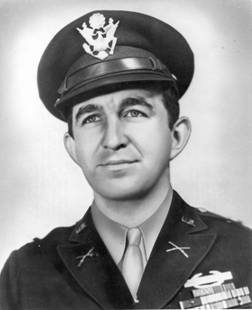
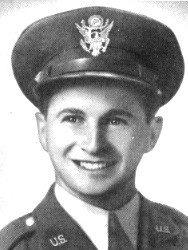
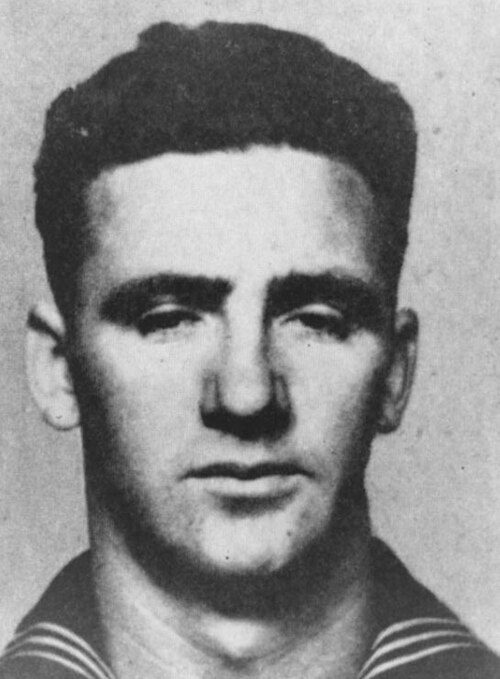
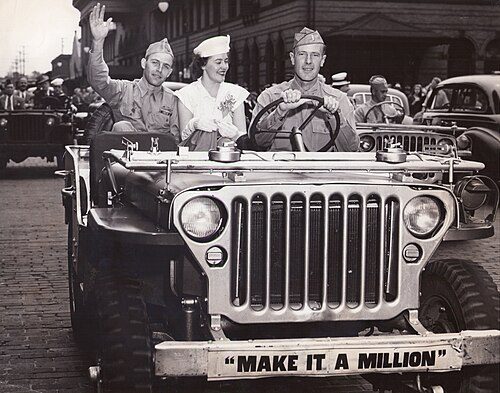
Lieutenant Charles Leroy Thomas, a soldier in the U.S. Army, was awarded the Medal of Honor posthumously for gallantry on December 14, 1944 in Climbach, France during World War II. At the time he was serving with Company C, 614th Tank Destroyer Battalion. Thomas was 24 years old.
2 other service members also received the Medal of Honor for actions on the same day. The medal was presented on January 13, 1997, 52 years after the action — the White House, presented by Pres. William J. Clinton. He later rose to the rank of First Lieutenant.
Thomas was born on April 17, 1920 in Birmingham, Jefferson County, Alabama. His Medal of Honor is credited to Detroit, Cook County, Michigan. Thomas died on February 15, 1980 in Wayne, Michigan, at the age of 59. He is buried at West Lawn Cemetery in Wayne, Michigan. His medal is held by Michigan Heroes Museum, Frankenmuth, MI.
Thomas is one of 474 Medal of Honor recipients from World War II and one of 112 credited to Michigan.
Official Medal of Honor citation
For conspicuous gallantry and intrepidity at the risk of his life above and beyond the call of duty: Then Lieutenant Charles L. Thomas distinguished himself by extraordinary heroism in action on 14 December 1944. One platoon of Company C, 614th Tank Destroyer Battalion, was designated as the lead element in a task force formed to storm and capture the village of Climbach, France. Lieutenant Thomas, the Commanding Officer of Company C, realized, with the obscurity of information regarding the enemy and a complete lack of reconnaissance, the mission would be an extremely dangerous one. Fully cognizant of the danger, Lieutenant Thomas volunteered to command the selected platoon of his company and ride in the column's leading vehicle - a highly maneuverable, but equally vulnerable, M-20 scout car. Lieutenant Thomas knew that if there was a concentration of enemy armor in the village, as was believed, he would absorb the initial shock of the first enemy resistance. The task force left Preuschdorf, France, at 1023 hours, and proceeded to advance in column toward Climbach. Lieutenant Thomas in his scout car stayed well in front of the column. At 1400 hours, upon reaching the high ground southeast of the village, Lieutenant Thomas experienced initial contact with the enemy. As his scout car advanced to an exposed position on the heights, he received intense direct fire from enemy artillery, self-propelled guns, and small arms at a range of seven hundred yards. The first burst of hostile fire disabled the scout car and severely wounded Lieutenant Thomas. He immediately signaled the column to halt. Before leaving the wrecked vehicle, Lieutenant Thomas and the crew found themselves subjected to a veritable hail of enemy fire. Lieutenant Thomas received multiple gunshot wounds in his chest, legs, and left arm. In spite of the intense pain caused by his wounds, Lieutenant Thomas ordered and directed the dispersion and emplacement of his first two antitank guns. In a few minutes these guns were effectively returning the enemy fire. Realizing that it would be impossible for him to remain in command of the platoon because of his injuries, Lieutenant Thomas then signaled for the platoon commander to join him. Lieutenant Thomas then thoroughly oriented him as to the enemy gun positions, his ammunition status, and the general situation. Although fully cognizant of the probable drastic consequences of not receiving prompt medical attention, Lieutenant Thomas refused evacuation until he felt certain that his junior officer was in full control of the situation. Only then did Lieutenant Thomas allow his evacuation to the rear. Throughout the action, Lieutenant Thomas displayed magnificent personal courage and a complete disregard for his own safety. His extraordinary heroism spurred the soldiers of the platoon to a fierce determination to triumph, and resulted in a mass display of heroism by them. Lieutenant Thomas' intrepid actions throughout the operation reflect the highest traditions of military service.
Citation text: U.S. Government, public domain.
Wounds and injuries
What the citation records about his wounds:
The first burst of hostile fire disabled the scout car and severely wounded Lieutenant Thomas.
Lieutenant Thomas received multiple gunshot wounds in his chest, legs, and left arm.
- Awarded posthumously — died February 15, 1980.
- Manner of death: natural causes
- Cause of death: cancer
- Age at death: 59
- Resting place: West Lawn Cemetery
Cause and manner of death: Wikidata.
Other decorations and honors
Besides the Medal of Honor, Charles Leroy Thomas received:
Source: Wikidata. Gold chips link to our guide to that decoration.
Battles and campaigns
Also served in: World War II.
Places
Veteran resources, cemeteries and meeting places in Michigan →
Timeline
- April 17, 1920Born in Birmingham, Jefferson County, Alabama
- December 14, 1944Act of valor — Climbach, FranceAge 24. Company C, 614th Tank Destroyer Battalion
- February 15, 1980Died in Wayne, MichiganAge 59.
- January 13, 1997Medal of Honor presented posthumouslyThe White House, presented by Pres. William J. Clinton
- Resting placeWest Lawn CemeteryWayne, Michigan
Biography
Charles Leroy Thomas (April 17, 1920 – February 15, 1980) was a United States Army major who was a company commander during World War II. In 1997, he was awarded the Medal of Honor, the nation's highest military decoration for valor, for his actions on December 14, 1944, near Climbach, France. Thomas and six other Black Americans who served in World War II were awarded the Medal of Honor on January 12, 1997. The Medal of Honor was posthumously presented to Thomas by President Bill Clinton on January 13, 1997, during a Medals of Honor ceremony for the seven recipients at the White House in Washington, D.C.
From the Wikipedia article “Charles L. Thomas”, licensed under CC BY-SA 4.0. Read the full article →
Further reading
- Medal of Honor recipient Army Maj. Charles L. Thomasaerotechnews.com · 2021