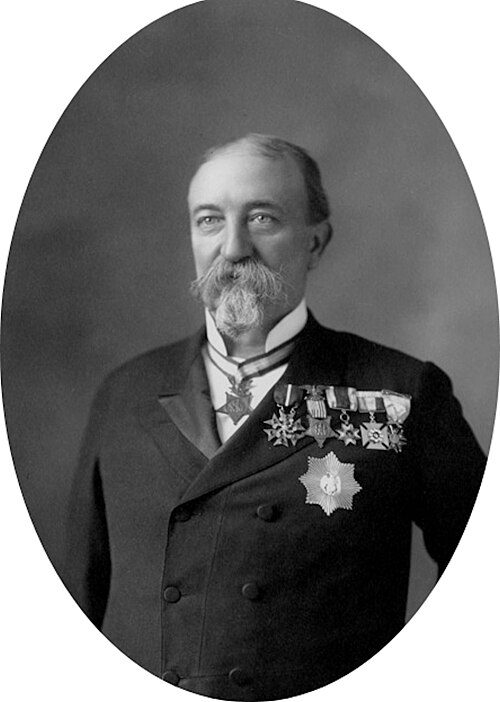
First Lieutenant Abram Pye Haring was a soldier in the U.S. Army who received the Medal of Honor for his actions on February 1, 1864 at Bachelor's Creek, North Carolina during the Civil War. At the time he was serving with Company G, 132d New York Infantry. Haring was 23 years old.
The medal was presented on June 28, 1890, 26 years after the action.
Haring was born on November 15, 1840 in New York, New York. Haring died on February 22, 1915 in Montclair, New Jersey, at the age of 74. He is buried at Canterbury Presbyterian Cemetery in Cornwall-on-the-Hudson, New York.
Haring is one of 1,525 Medal of Honor recipients from the Civil War and one of 678 credited to New York.
Official Medal of Honor citation
With a command of 11 men, on picket, resisted the attack of an overwhelming force of the enemy.
Citation text: U.S. Government, public domain.
Battles and campaigns
Also served in: American Civil War.
Places
Veteran resources, cemeteries and meeting places in New York →
Timeline
- November 15, 1840Born in New York, New York
- February 1, 1864Act of valor — Bachelor's Creek, North CarolinaAge 23. Company G, 132d New York Infantry
- June 28, 1890Medal of Honor presented
- February 22, 1915Died in Montclair, New JerseyAge 74.
- Resting placeCanterbury Presbyterian CemeteryCornwall-on-the-Hudson, New York
Biography
Abram Pye Haring (November 15, 1840 – February 22, 1915) was an American soldier who fought in the American Civil War. Haring received his country's highest award for bravery during combat, the Medal of Honor. Haring's medal was won for his actions at Bachelor's Creek in North Carolina. Haring and the eleven men under his command resisted an overwhelming attack from Confederate forces on February 1, 1864. He was honored with the award on June 28, 1890. Haring was born in Cornwall-on-Hudson, New York, and entered service in New York City, where he was later buried. DETAILS RANK: FIRST LIEUTENANT CONFLICT/ERA: U.S.
From the Wikipedia article “Abram P. Haring”, licensed under CC BY-SA 4.0. Read the full article →